

Post-Antibiotic Care: Restoring Your Microbiome
December 12, 2023
The 30-Day Peptide Challenge for Better Skin
January 13, 2024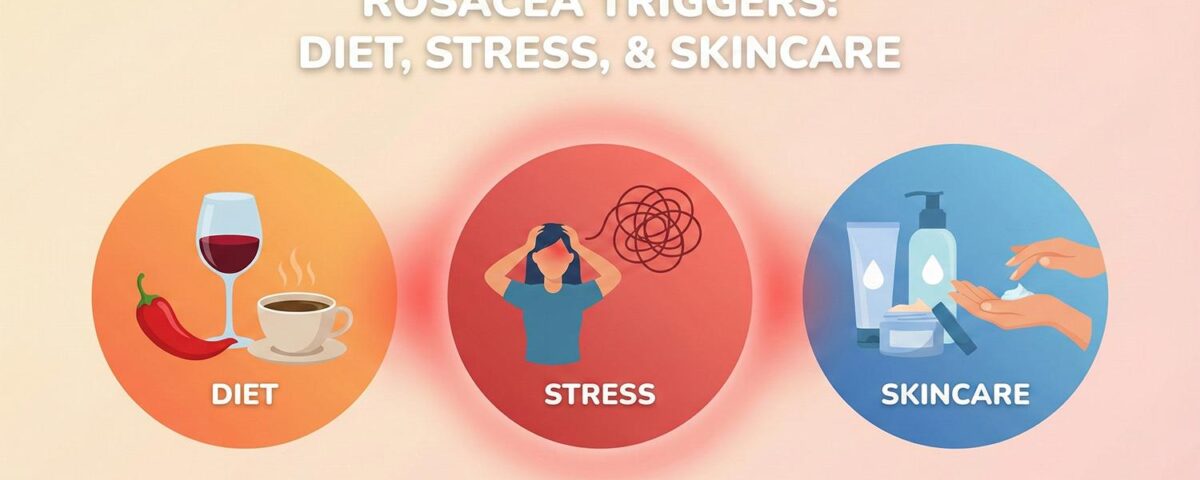
For the 415 million people worldwide living with rosacea, the condition is more than just “blushing.” It is a chronic inflammatory disorder that can feel unpredictable, painful, and deeply frustrating.
One minute your skin is calm; the next, you are facing a burning red flush, pustules, or visible broken capillaries. While there is currently no cure for rosacea, it is highly manageable. The secret lies in identifying and controlling your unique triggers.
Rosacea is not just a skin condition; it is a vascular and neural response to your environment. By understanding the biology of what dilates your blood vessels (vasodilation), you can create a lifestyle that keeps the redness at bay. This guide breaks down the three pillars of rosacea management: Diet, Stress, and Skincare.
The Biology of the Flush
Before fixing the problem, you must understand the mechanism. Rosacea skin has a compromised barrier and hyper-reactive blood vessels.
- Vascular Hyper-Reactivity: Your facial blood vessels dilate (open wide) too easily and stay open longer than normal.
- Neurogenic Inflammation: Your nerves are hypersensitive, releasing inflammatory chemicals in response to stimuli that wouldn’t bother “normal” skin.
- The Demodex Factor: Everyone has microscopic mites (Demodex) on their skin. Rosacea patients often have 10x the normal density, triggering an immune response.
Pillar 1: Dietary Triggers (The “Heat” Source)
Food is the most common trigger, but it varies wildly from person to person. The National Rosacea Society lists the following as the most frequent offenders:
1. Cinnamaldehyde Foods
Foods containing cinnamaldehyde create a warming sensation that tricks the nervous system into dilating blood vessels.
The Culprits: Cinnamon, tomatoes, citrus fruits, and chocolate.
2. Spicy Foods (Capsaicin)
Capsaicin, the chemical that makes peppers hot, interacts directly with pain receptors in the skin, causing instant flushing and sweating.
The Fix: You don’t have to eat bland food. Swap “hot” spices (cayenne, chili) for “aromatic” spices (coriander, cardamom, turmeric) which are anti-inflammatory.
3. Histamine-Rich Foods
Histamine is a chemical that naturally causes blood vessels to swell. High-histamine foods can mimic an allergic reaction in rosacea patients.
The Culprits: Aged cheese, fermented foods (sauerkraut, kimchi), wine, and processed meats.
4. Alcohol (The Vasodilator)
Alcohol is a direct vasodilator. Red wine is notoriously the worst trigger due to the combination of alcohol, tyramines, and histamines. Clear spirits like vodka or gin are often better tolerated.
Pillar 2: Stress (The Internal Fire)
Stress is arguably the number one trigger for flares, yet it is often the least addressed. This is due to the Gut-Brain-Skin Axis.
The Cortisol Connection
When you are stressed, your body releases cortisol and adrenaline. These hormones increase blood flow to the face and trigger systemic inflammation.
The Flush: Unlike a food flush which might last an hour, a stress flush acts on the nervous system and can last for days, often accompanied by a breakout of acne-like bumps (papulopustular rosacea).
Management Strategy
- Cooling Breathwork: Slow, deep breathing activates the parasympathetic nervous system (rest and digest), physically constricting blood vessels.
- Temperature Regulation: Stress often raises body temperature. Sipping ice water during a stressful event can physically cool the blood and prevent a flare.
Support your stress response. Explore our Calming Adaptogens & Nootropics to keep cortisol in check.
Pillar 3: Skincare (The Barrier Defense)
If you have rosacea, your skin barrier is likely “leaky,” allowing irritants in and water out. The goal of skincare is to seal the cracks.
Ingredients to Avoid (The “No” List)
Turn your bottles around. If you see these, throw them out:
- Alcohol (SD Alcohol, Denatured Alcohol): Strips the barrier instantly.
- Witch Hazel: Often too astringent.
- Fragrance (Synthetic or Essential Oils): The #1 cause of contact dermatitis.
- Mechanical Scrubs: Never use crushed walnut or apricot scrubs. They cause micro-tears that invite inflammation.
Ingredients to Embrace (The “Yes” List)
- Azelaic Acid: The gold standard. It kills bacteria, reduces redness, and calms inflammation.
- Niacinamide (Vitamin B3): Strengthens the skin barrier and reduces redness, though high concentrations (10%+) can irritate some. Stick to 2-5%.
- Centella Asiatica (Cica): An herbal extract famous for wound healing and cooling redness.
Looking for targeted solutions? Browse our Skin Health & Rosacea Support category for pharmaceutical-grade actives.
Pharmaceutical Interventions
Sometimes, lifestyle changes aren’t enough. In these cases, specific medications target the root causes.
- Ivermectin (Topical): Specifically targets the overgrowth of Demodex mites. It is often the game-changer for those with pustules.
- Metronidazole: An antibiotic and anti-inflammatory often prescribed for long-term maintenance.
- Low-Dose Doxycycline: Taken orally at sub-antimicrobial doses (e.g., 40mg), it acts purely as an anti-inflammatory without damaging the gut microbiome.
The Sun: The Ultimate Enemy
We cannot finish a guide on triggers without mentioning Ultraviolet (UV) Light. Sun exposure is the top reported trigger for 81% of patients.
UV radiation stimulates the growth of new blood vessels (angiogenesis), leading to permanent spider veins (telangiectasia).
The Rule: You must wear SPF 30+ daily. However, chemical sunscreens often sting rosacea skin. Opt for Physical (Mineral) Sunscreens containing Zinc Oxide or Titanium Dioxide, which reflect heat rather than absorbing it.
Conclusion: The Rosacea Diary
Rosacea is highly individual. Tomatoes might destroy your skin, while your neighbor with rosacea eats them daily. The only way to know your specific triggers is to track them.
Keep a “Rosacea Diary” for 4 weeks. Note what you ate, your stress level, and the weather every time you flush. Once you identify the pattern, you regain control. You do not have to live with a permanent red face; with the right diet, stress management, and barrier repair, you can cool the fire.
Build a routine that works. Visit Aavelone Pharma for Rosacea-Safe Skincare and Anti-Inflammatory Supplements.
