

Managing to improve gastrointestinal health naturally: Herbal Remedies and Lifestyle Changes
December 12, 2023
Rosacea Triggers: Diet, Stress, and Skincare
December 14, 2023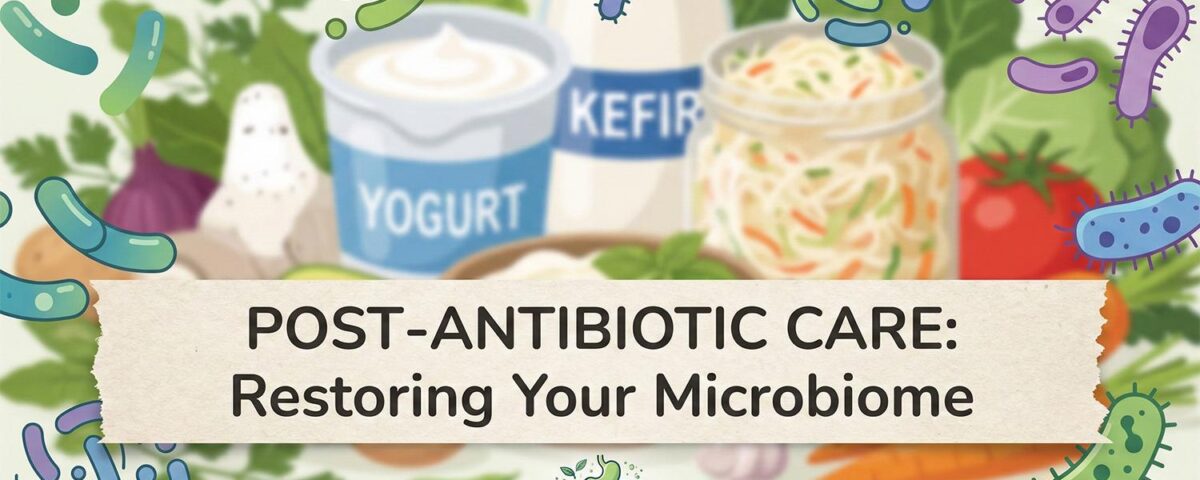
Antibiotics are one of modern medicine’s greatest achievements. They have turned once-fatal bacterial infections into minor inconveniences. However, their mechanism of action is often described as “scorched earth.”
Most broad-spectrum antibiotics cannot distinguish between the pathogen making you sick and the beneficial bacteria that keep you healthy. A single course of antibiotics can wipe out up to a third of your gut bacteria, leading to a state called dysbiosis—an imbalance in the microbial community.
The consequences of this imbalance can last for months or even years, manifesting as digestive distress, weakened immunity, and even mood fluctuations via the gut-brain axis. The good news? With a targeted strategy involving specific strains, timing, and nutrition, you can rebuild your microbiome faster and stronger.
The Damage Assessment: What Happens to Your Gut?
Your gut is home to trillions of microorganisms, collectively known as the microbiota. In a healthy state (eubiosis), these microbes aid digestion, produce vitamins (like B12 and K), and train your immune system.
When you introduce an antibiotic:
- Diversity Plummets: High diversity is a marker of health. Antibiotics kill off vulnerable species, reducing the variety of your internal ecosystem.
- Opportunistic Overgrowth: With the “good guys” gone, resistant pathogens (like Clostridium difficile or Candida yeast) have room to multiply and take over.
- Mucosal Damage: The protective mucus lining of the gut can thin, leading to increased intestinal permeability (“Leaky Gut”).
Phase 1: During Treatment (Damage Control)
A common myth is that you should wait until after you finish your medication to start taking probiotics because “the antibiotics will just kill them.” This is incorrect.
Taking probiotics during your course is crucial to maintain a presence of beneficial bacteria, preventing pathogens from colonizing the empty space.
The “2-Hour Rule”
To prevent the antibiotic from killing your supplement immediately, spacing is key. Take your probiotic at least 2 to 4 hours away from your antibiotic dose.
The Secret Weapon: Saccharomyces boulardii
If there is one supplement to prioritize during antibiotic treatment, it is this. S. boulardii is not a bacteria; it is a beneficial yeast. Because it is fungal, antibiotics cannot kill it.
It acts as a placeholder, temporarily coating the intestinal wall to prevent bad bacteria from attaching until your natural flora can regrow.
Protect your digestive system during treatment. Explore our Digestive Health & Probiotics category for high-CFU solutions.
Phase 2: The “Re-Seeding” Phase (Probiotics)
Once the antibiotic course is finished, the goal shifts from protection to restoration. You need to reintroduce beneficial bacterial colonies. However, not all probiotics are created equal.
Key Strains to Look For
Generic “10 Billion CFU” labels are less important than the specific strains included. Look for multi-strain formulas containing:
- Lactobacillus rhamnosus (LGG): Extensively studied for preventing antibiotic-associated diarrhea.
- Lactobacillus acidophilus: Critical for digesting lactose and supporting immune health.
- Bifidobacterium bifidum: Helps repair the stomach lining and digest fiber.
Fermented Foods
Supplements are potent, but food provides a broader diversity. Incorporate these “living foods” daily:
- Sauerkraut (unpasteurized)
- Kimchi
- Kefir (often more potent than yogurt)
- Miso
Phase 3: The “Feeding” Phase (Prebiotics)
This is where most people fail. You can swallow billions of bacteria, but if you don’t feed them, they will die. Prebiotics are the non-digestible fibers that act as fertilizer for your gut bacteria.
To accelerate recovery, you must increase your intake of specific fibers that generate Short-Chain Fatty Acids (SCFAs) like butyrate, which fuels the cells lining your colon.
Top Prebiotic Foods:
- Inulin: Found in garlic, onions, and leeks.
- Resistant Starch: Found in cooked-and-cooled potatoes, green bananas, and oats.
- Polyphenols: Found in berries, dark chocolate, and green tea. These micronutrients inhibit bad bacteria while feeding the good ones.
Phase 4: Lifestyle Factors for Repair
Restoring your gut isn’t just about what you eat; it’s about the environment you create for your body.
Sleep and the Microbiome
Research has shown that circadian rhythm disruption can alter gut bacteria composition. Prioritize 7-9 hours of quality sleep to lower cortisol, as high stress hormones can increase gut permeability.
Avoid the “Killers”
While recovering, your gut is vulnerable. Avoid substances that further irritate the lining or feed pathogens:
- Alcohol: Directly damages the gut lining and increases inflammation.
- Refined Sugar: The primary fuel source for bad bacteria and yeast (Candida).
- Artificial Sweeteners: Some studies suggest sweeteners like sucralose can negatively alter gut flora diversity.
Conclusion: Patience is Key
Restoring a microbiome after a heavy course of antibiotics is not an overnight process. While symptoms like diarrhea may resolve in days, full ecological recovery can take weeks or months.
The strategy is simple but requires consistency: Protect during the course with resistant strains like S. boulardii, Re-seed with diverse probiotics immediately after, and Feed the new colonies with abundant prebiotic fiber.
By taking these proactive steps, you turn a necessary medical intervention into an opportunity to build a more resilient digestive system.
Need support for your recovery? Browse our General Health & Wellness collection for pharmaceutical-grade supplements designed to support systemic repair.
