

Rosacea Triggers: Diet, Stress, and Skincare
December 14, 2023
Treatment of Erectile Dysfunction: Exploring Psychological and Physical Causes
January 28, 2024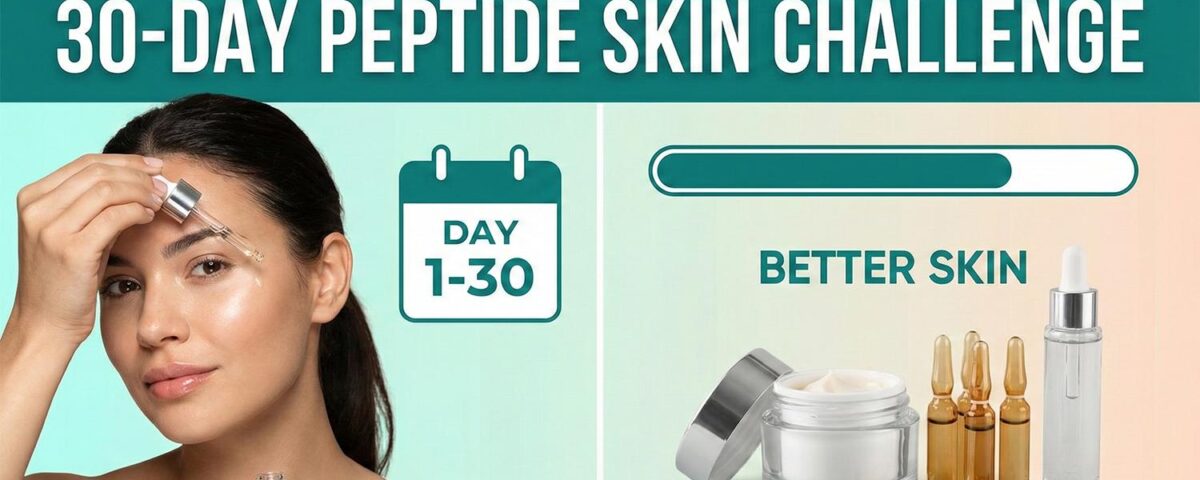
The skincare industry is built on hope. We buy expensive creams, retinol serums, and complex 10-step routines, hoping to reverse the clock. But for most, the results are superficial hydration at best.
To truly change the texture and elasticity of your skin, you have to go deeper than the epidermis. You need to speak the language of your cells.
Enter Peptides. Unlike standard moisturizers that sit on top of the skin, peptides are signaling molecules. They don’t just patch the cracks; they tell your body to rebuild the foundation.
In this guide, we are issuing a 30-Day Challenge. We will move away from department store cosmetics and introduce you to clinical-grade protocols using GHK-Cu (Copper Peptide)—the gold standard for skin regeneration.
The Science: Why Your Skin Ages (and How Peptides Fix It)
Skin aging is primarily the loss of Collagen and Elastin. Starting in your mid-20s, your body produces about 1% less collagen every year. By 40, the structural integrity of your skin has significantly weakened, leading to sagging and fine lines.
GHK-Cu (Glycyl-L-Histidyl-L-Lysine-Copper) is a naturally occurring peptide found in human plasma. It is famous for its ability to:
- Stimulate Collagen Synthesis: Research suggests GHK-Cu can increase collagen production by up to 70%, outperforming Vitamin C and Tretinoin in some markers.
- Promote Angiogenesis: It helps form new blood vessels, improving nutrient delivery to the skin surface (the “glow”).
- Reduce Inflammation: It is a potent anti-inflammatory, calming redness and irritation.
While many “anti-aging” creams claim to contain copper peptides, they often use minuscule dustings of the compound. To see real results in 30 days, you need the clinical concentration.
The Challenge: The Protocol
This challenge involves using high-purity GHK-Cu, either applied topically (via a custom serum) or administered systemically, to flood the body with regenerative signals.
The Setup: Choosing Your Source
You cannot rely on a $20 Amazon cream. For this challenge, the biohacker standard is to use Lyophilized (Freeze-Dried) GHK-Cu mixed into a carrier agent, or high-potency formulations specifically designed for research.
Note: If mixing your own topical solution, a concentration of 1% to 2% is the clinical sweet spot. Higher is not always better and can cause irritation.
Week 1: Acclimation and Detox
Goal: Introduce the peptide without overwhelming the skin barrier.
- Morning: Gentle cleanser, Vitamin C serum, SPF.
- Evening: Apply GHK-Cu serum to clean, dry skin. Wait 15 minutes before applying moisturizer.
- Frequency: Every other night.
What to watch for: Some users experience a “purging” phase or mild dryness as cell turnover accelerates. This is normal.
Week 2: The Ramp-Up
Goal: Increase frequency and stimulate deeper repair.
- Frequency: Increase GHK-Cu application to every night.
- Add-On (Optional): Microneedling (0.25mm – 0.5mm) once this week. Microneedling creates micro-channels that allow the peptide to penetrate past the stratum corneum (the dead outer layer).
For those interested in the regenerative power of peptides beyond just skin, explore our Peptides & Recovery category.
Weeks 3 & 4: The “Glow” Phase
Goal: Maximum saturation and barrier support.
By now, the anti-inflammatory effects should be visible. Redness fades, and the skin begins to look “thicker” and more resilient.
- Systemic Support: Ensure you are consuming adequate protein and perhaps a Collagen Hydrolysate supplement. GHK-Cu is the foreman shouting orders, but amino acids are the bricks. You cannot build a wall without bricks.
- Hydration: Copper peptides love water. Pair your evening routine with a Hyaluronic Acid serum to lock in moisture.
The “First Aid” Peptide: BPC-157 for Problem Skin
While GHK-Cu is the king of aesthetics, BPC-157 deserves a mention for those suffering from acne scars or active inflammation.
BPC-157 is known for healing soft tissue. While typically used for tendon injuries, anecdotal evidence and emerging research suggest it can accelerate the healing of acne lesions and reduce the formation of scar tissue when applied or administered systemically.
What to Expect After 30 Days
Realistically, deep wrinkles do not vanish in a month. However, the 30-day mark is where the biological shift becomes visible.
| Marker | Expected Change |
|---|---|
| Texture | Smoother, “glass-like” feel due to increased cell turnover. |
| Elasticity | Skin feels firmer and bounces back faster when pinched. |
| Tone | Reduction in blotchiness and redness (anti-inflammatory effect). |
| Density | Thin, crepey skin (especially under eyes) appears thicker. |
Safety: The “Uglies”
There is a phenomenon known as the “Copper Uglies.” If you use too high a concentration of GHK-Cu, it can temporarily degrade collagen before rebuilding it, leading to loose-looking skin for a few days. It can also cause zinc depletion.
The Fix:
- Stick to the 1-2% concentration.
- Take a Zinc Picolinate supplement orally to maintain the Copper/Zinc balance in your body.
Balancing your internal minerals is just as important as the topical application. Check our Metabolic Health section for foundational support.
Conclusion: Skincare is Biology, Not Magic
The 30-Day Peptide Challenge is not about buying a miracle cure. It is about utilizing a biological lever—the GHK-Cu peptide—to restart a dormant process in your body.
If you are tired of the marketing fluff and want to treat your skin with the same scientific rigor you treat your training or nutrition, it is time to upgrade your protocol. Consistency, clinical purity, and patience are the keys to the best skin of your life.
