

The Best Skincare Routine for Sensitive Skin: What to Know
November 23, 2022
What Is a Good Estrogen Level for Men?
January 21, 2023
Have you ever felt like work demands are overwhelming your personal life? Or have you struggled to carve out time amid an increasingly hectic schedule? These questions resonate with many, as finding a healthy work-life balance has become a growing challenge in today’s fast-paced world. As someone who has navigated the demands of a professional career while maintaining personal well-being, I’ve found that achieving this balance requires a combination of practical strategies and intentional lifestyle changes.
In this article, you’ll discover how to create a healthy work-life balance that reduces stress and enhances overall well-being. We’ll explore actionable steps, practical examples, and innovative solutions to common work-life balance issues. By the end, you’ll clearly understand how to manage your time more effectively and implement strategies that suit your professional and personal needs.
As someone who has spent years balancing demanding work schedules while prioritizing personal health and relationships, I know firsthand how challenging it can be to maintain a healthy work-life balance. Early in my career, I often felt overwhelmed by work, leaving little time for self-care, hobbies, or spending time with loved ones. This imbalance led to heightened stress, fatigue, and burnout. It wasn’t until I made conscious adjustments—like setting clear boundaries, learning to delegate, and practicing mindfulness—that I felt more in control of my time.
One of the most impactful changes I made was creating a structured daily routine that included dedicated periods for work, personal development, and relaxation. I also learned the importance of saying “no” when necessary and not overcommitting to tasks that didn’t align with my goals. These strategies allowed me to experience less stress and improved my overall well-being, reinforcing the importance of a balanced approach to work and life.
This personal journey inspired me to share practical insights with others who face similar struggles, helping them achieve a healthier balance and supporting professional success and personal happiness.
In the next section, we’ll explore the definition of work-life balance and the importance of prioritizing personal and professional life aspects.
What is a Healthy Work-Life Balance?
A healthy work-life balance refers to the equilibrium between the demands of one’s professional career and personal life, allowing an individual to enjoy both without feeling overwhelmed. It’s not about dividing your time equally between work and life but about prioritizing your time and energy effectively based on your current needs. According to the World Health Organization (WHO), chronic workplace stress has become a global issue, contributing to physical and mental health challenges. Achieving a healthy work-life balance means finding a sustainable way to meet work demands while making time for personal interests, relationships, and self-care.
Learn more: The Impact of Social Media on Mental Health
The Importance of a Healthy Work-Life Balance
Maintaining a healthy work-life balance reduces stress, prevents burnout, and improves overall well-being. When individuals focus too much on work, they risk neglecting personal relationships, physical health, and mental well-being. Harvard Business Review highlights that people with an excellent work-life balance report higher job satisfaction, greater productivity, and lower stress levels. This balance leads to improved mental health, better physical health outcomes, and a more fulfilled life.
Signs of an Unhealthy Work-Life Balance
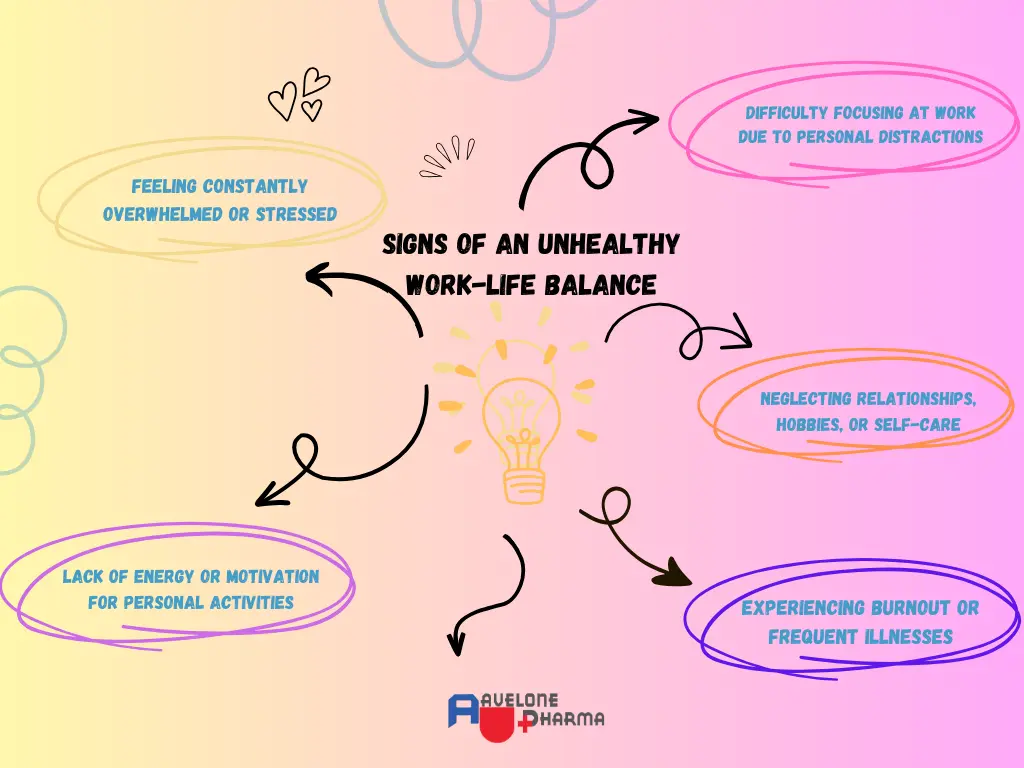
Several signs indicate that someone might be struggling with an unhealthy work-life balance:
- Feeling constantly overwhelmed or stressed
- Lack of energy or motivation for personal activities
- Difficulty focusing at work due to personal distractions
- Neglecting relationships, hobbies, or self-care
- Experiencing burnout or frequent illnesses
When these symptoms arise, it’s essential to reevaluate time spent and look for ways to adjust priorities. In the next section, we’ll explore practical examples of work-life balance and how different strategies can be applied to create more harmony in daily life.
Source
World Health Organization. Mental health in the workplace.
How to Create a Healthy Work-Life Balance
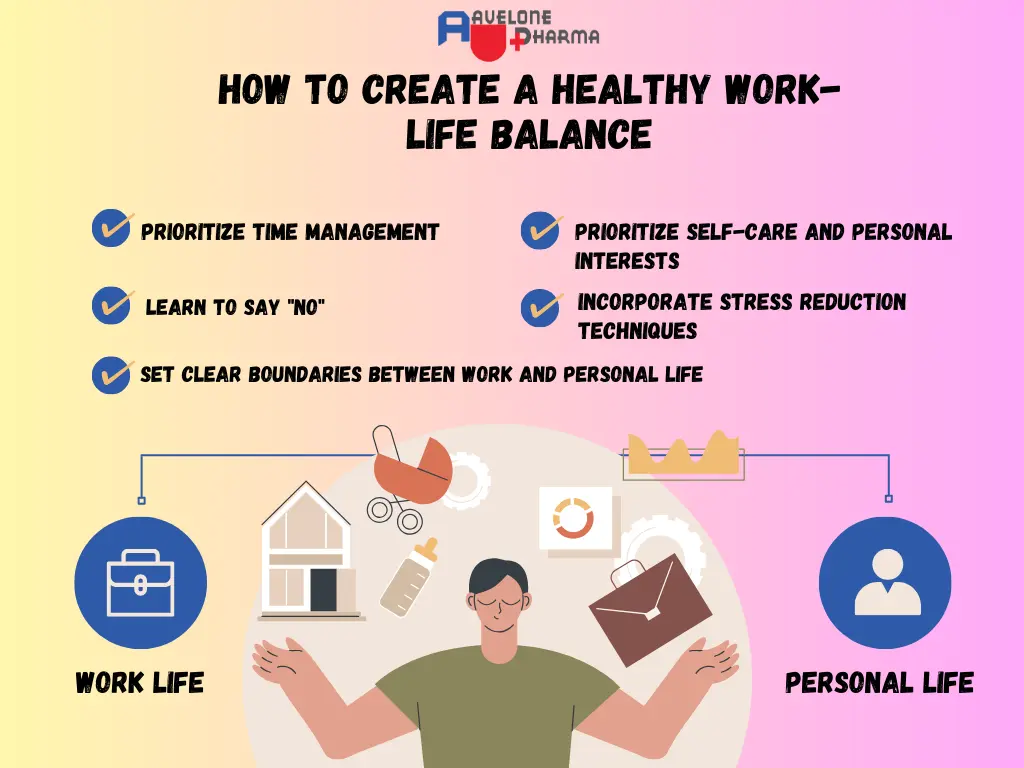
Achieving a healthy work-life balance requires intentional effort and practical strategies tailored to individual circumstances. Here are some key steps that can help you achieve this balance, reduce stress, and enhance your personal and professional life.
- Set Clear Boundaries Between Work and Personal Life
- Prioritize Time Management
- Learn to Say “No”
- Incorporate Stress Reduction Techniques
- Prioritize Self-Care and Personal Interests
Set Clear Boundaries Between Work and Personal Life
One innovative idea for work-life balance is setting firm boundaries between work and personal time. This might involve setting specific work hours and ensuring that you do not check emails or perform work tasks outside those hours. It’s also crucial to communicate these boundaries to colleagues and managers to ensure expectations are clear.
For example, if your workday ends at 6 p.m., shutting down your computer and focusing on personal activities, whether spending time with family, exercising, or pursuing hobbies. According to a study by the American Psychological Association (APA), maintaining boundaries between work and personal life significantly reduces stress and prevents burnout.
Prioritize Time Management
Effective time management is essential to balance work and personal responsibilities. Create a daily or weekly schedule that allocates time for work tasks and includes time for exercise, relaxation, and social activities. Using tools like calendars, task managers, or even simple to-do lists can help address work and personal priorities.
A report by Forbes emphasizes that good time management can help people avoid unnecessary stress and maintain productivity without sacrificing their personal lives. Blocking out specific times during the day for self-care, family, or hobbies can create more structure and balance in your routine.
Learn to Say “No”
Saying “no” is a powerful tool in maintaining a healthy work-life balance. Often, people overextend themselves by taking on too many responsibilities, whether at work or in their personal lives. Recognizing your limits and being willing to say “no” when necessary can prevent overwhelm.
For instance, if a colleague asks for help with a project that doesn’t align with your current priorities, it’s okay to decline respectfully. Doing so preserves time and energy for your most important tasks. A study in the Journal of Occupational Health Psychology found that learning to say no improves job satisfaction and reduces stress, helping to sustain a better balance between work and personal life.
Incorporate Stress Reduction Techniques
Stress management is crucial for maintaining a healthy work-life balance. Incorporating stress reduction techniques like mindfulness, meditation, or physical exercise can help mitigate the adverse effects of work-related stress. Even brief daily exercises, such as a 10-minute walk or a 5-minute meditation, can lower stress levels and increase overall well-being.
According to the Mayo Clinic, practicing mindfulness helps individuals stay present, reduce anxiety about future tasks, and improve focus during work hours.
Prioritize Self-Care and Personal Interests
Lastly, ensuring that you regularly engage in self-care and personal activities is essential to maintaining a healthy balance. This includes making time for activities that rejuvenate you, such as reading, outdoors, or pursuing creative hobbies. These activities are not just “nice to have” but essential for mental and physical well-being.
Mayo Clinic. “Mindfulness exercises
Work-Life Balance Examples
Below are several examples of how people in various professions and situations can create a work-life balance that fits their unique needs.
- Remote Workers
- Parents
- Entrepreneurs
- Healthcare Professionals
- Women in Leadership

Work-Life Balance for Remote Workers
Remote work offers flexibility but can blur the boundaries between work and personal life. To maintain separation between professional and personal responsibilities, remote workers can benefit from setting clear work hours and creating a designated workspace. Taking regular breaks and ending the workday at a set time helps prevent burnout and allows personal time.
For instance, a remote marketing professional may start work at 9 a.m. and finish by 5 p.m., using a dedicated home office space to mentally and physically separate work from home life. They can take breaks throughout the day to engage in activities like exercise, cooking, or spending time with family, ensuring they maintain balance.
Work-Life Balance for Parents
For working parents, balancing family responsibilities with work can be challenging. Creating a healthy work-life balance often involves prioritizing tasks, setting realistic expectations, and being flexible when needed. Parents may establish routines that allow for family time during mornings and evenings while managing work during the day.
An example might be a working parent who schedules their workday from 8 a.m. to 3 p.m., allowing them to pick up their children from school and spend quality time together in the afternoons. They may reserve evenings for family dinners and relaxation, ensuring work does not interfere with essential family moments.
Work-Life Balance for Entrepreneurs
Entrepreneurs and business owners often face longer hours and greater responsibilities, making work-life balance a difficult but essential goal. To achieve this balance, entrepreneurs should prioritize delegation, time management, and clear boundary-setting. Taking time off is also crucial for maintaining long-term productivity and avoiding burnout.
For example, an entrepreneur running a small business may designate certain days of the week for meetings and operations, leaving the weekends for personal time and relaxation. They can also delegate tasks like administrative work to trusted employees or freelancers, freeing up time for business growth and individual activities.
Work-Life Balance for Healthcare Professionals
Healthcare professionals, especially those in demanding roles like doctors and nurses, often work long shifts with little downtime. For them, achieving a healthy work-life balance involves scheduling time for rest and self-care and engaging in stress-relief activities outside of work.
A nurse, for example, may work 12-hour shifts but ensure that they engage in stimulating activities such as yoga, spending time outdoors, or pursuing hobbies on their days off. Maintaining this balance is essential for preventing burnout and ensuring they are mentally and physically prepared for their demanding roles.
Work-Life Balance for Women in Leadership
Women in leadership often face unique challenges, such as balancing high-level job demands with family or personal life. To manage work-life balance, many focus on prioritizing tasks, setting clear boundaries, and leveraging support networks at home and work.
A woman in a senior executive role may schedule work meetings and essential tasks during peak productivity hours while setting aside evenings for personal time or family commitments. She can create a sustainable balance that supports professional success and personal fulfillment by building a reliable team, delegating tasks, and maintaining strong communication.
Learn more: Stay Active While Working a Desk Job
Conclusion
Achieving a healthy work-life balance is not a one-size-fits-all approach; it varies based on individual circumstances, work environments, and personal priorities. However, by implementing strategies such as setting clear boundaries, managing time effectively, learning to say “no,” and incorporating stress-reduction techniques, anyone can create a balance that supports their professional goals and personal well-being. Whether you’re a remote worker, a parent juggling family and career, an entrepreneur, or a healthcare professional, finding a routine that aligns with your values and lifestyle is critical.
Ultimately, the benefits of maintaining a healthy work-life balance extend beyond reducing stress; it leads to increased productivity, job satisfaction, and overall life fulfillment. By applying the examples and solutions discussed in this article, you can take control of your time and create a more harmonious relationship between your work and personal life.
In the next step of your journey, consider evaluating your current work-life balance and identifying areas for improvement. What small changes can you implement today to align your work and personal life better? With the right strategies, a healthy work-life balance is well within reach.

Support your body with Avelonepharma.
Supporting your body with the right supplements can make all the difference in achieving a healthy work-life balance. AavelonePharma’s supplements are regarded as the best in the market due to their exceptional quality, high purity, and authenticity. AavelonePharma adheres to strict GMP (Good Manufacturing Practice) and USP (United States Pharmacopeia) standards, ensuring its products meet the highest safety and quality benchmarks.
People worldwide, including athletes and professionals, trust these supplements for their proven effectiveness in maintaining overall health and well-being. Whether you’re looking to reduce stress, improve energy levels, or support physical recovery, AavelonePharma’s supplements provide reliable, top-tier options to help you maintain the balance you need for work and life.
Frequently Asked Questions About Work-Life Balance
What is the best way to achieve work-life balance?
The best way to achieve work-life balance is to set clear boundaries, prioritize your time, and incorporate regular breaks and self-care into your routine. Flexibility in your work schedule can also help.
What are some innovative ideas for work-life balance?
Innovative ideas for work-life balance include remote work options, flexible hours, job sharing, and wellness programs that focus on mental and physical health.
How can I improve my work-life balance as an employee?
Employees can improve work-life balance by setting clear boundaries between work and personal time, managing their time effectively, and communicating with their employers about flexible work options.
