

What is adrenaline and how does it work?
September 13, 2022
Libido Killers: How Stress and Cortisol Ruin Your Sex Life
September 22, 2022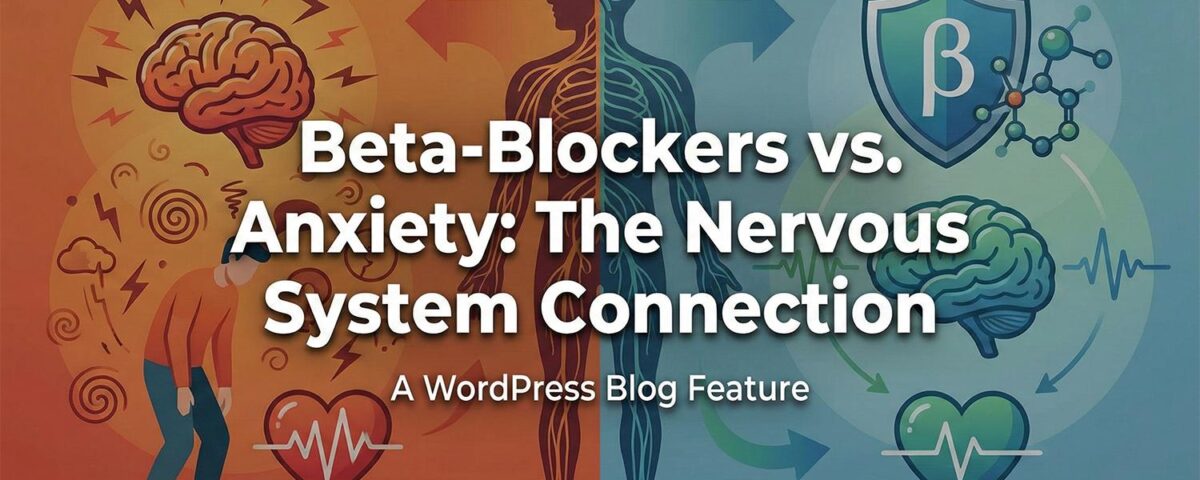
In the high-stakes world of public speaking, musical performance, and even competitive sports, there is an “open secret” often whispered backstage. It isn’t meditation, and it isn’t a stiff drink. It is a class of cardiac medication known as Beta-Blockers.
Originally designed to manage high blood pressure and heart conditions, drugs like Propranolol and Atenolol have found a massive off-label user base among those suffering from situational anxiety. But how does a heart medication calm the mind? Or does it?
To understand the debate of “Beta-Blockers vs. Anxiety,” we must look under the hood of the human nervous system. This article strips away the anecdotes to explain the precise mechanism of action, the difference between physical and mental anxiety, and the safety profile of blocking your own adrenaline.
The Physiology of Fear: The Sympathetic Nervous System
To understand how beta-blockers work, you first need to understand what happens when you get nervous. When you perceive a threat—whether it’s a lion or a microphone—your brain activates the Sympathetic Nervous System (SNS).
This is the “Fight or Flight” response. Your adrenal glands release a flood of catecholamines, primarily Epinephrine (Adrenaline) and Norepinephrine (Noradrenaline).
These chemicals circulate through your blood and look for “docking stations” called Beta-Adrenergic Receptors. These receptors are found all over your body, particularly in the heart, lungs, and arteries.
When Adrenaline hits these receptors, the following happens:
- Heart Rate Spikes: To pump more blood to muscles.
- Tremors/Shaking: Due to increased muscle tension and nerve firing.
- Sweating: To cool the body down during anticipated exertion.
- Voice Quavering: Due to tight vocal cords and shallow breathing.
Mechanism of Action: How Beta-Blockers Intervene
This is where the beta-blocker enters the equation. As the name implies, these drugs act as competitive antagonists at the beta-receptor sites.
Think of your beta-receptors as a lock, and adrenaline as the key. A beta-blocker is like a piece of gum stuck in the lock. The adrenaline is still floating in your blood—you are still chemically “stressed”—but the adrenaline cannot bind to the receptor to turn on the physical response.
The result?
Your brain might be thinking, “I am terrified,” but your body acts as if it is resting on the couch. Your heart rate remains low, your hands do not shake, and your voice remains steady.
Physical vs. Mental Anxiety: The Critical Distinction
This is the most misunderstood aspect of beta-blockers and the primary reason beginners get confused. Beta-blockers do not treat the psychological root of anxiety.
Benzodiazepines (e.g., Xanax, Valium)
These drugs work on the central nervous system (brain) by boosting GABA, a neurotransmitter that sedates the mind. They make you feel mentally “high,” sleepy, or carefree. They also carry a high risk of addiction and cognitive impairment.
Beta-Blockers (e.g., Propranolol)
These drugs work primarily on the peripheral nervous system (body). They do not cross the blood-brain barrier as aggressively (though Propranolol does cross it more than others like Atenolol). They generally do not lower worry or intrusive thoughts directly.
Why use them then?
They break the Bio-Feedback Loop.
Often, anxiety is a cycle: You feel a little nervous -> Your hands shake -> You notice your hands shaking -> You panic that people will see you shaking -> You shake more. By physically preventing the shake and the racing heart, beta-blockers stop this feedback loop, allowing you to perform confidently despite the mental nerves.
The “Performance Anxiety” Gold Standard
This distinct mechanism is why beta-blockers are the preferred treatment for Performance Anxiety (social anxiety specific to tasks) rather than Generalized Anxiety Disorder (GAD).
Ideal Use Cases (Off-Label):
- Public Speaking: Keeping the voice steady and preventing the “red flush” on the neck/face.
- Musicians: Essential for violinists or surgeons where fine motor control is destroyed by adrenaline tremors.
- Interview/Test Taking: Keeping the heart rate low allows for better recall than the “brain fog” associated with panic.
Senior Strategist Note: Because they do not impair cognitive function (unlike Benzodiazepines), professionals can take them and remain sharp, articulate, and focused.
The Risks: It’s Not Just a Vitamin
While often touted as safer than addictive anti-anxiety meds (and they are, regarding dependency), beta-blockers are not harmless. They are potent cardiovascular drugs.
Contraindications & Side Effects:
- Asthma: This is the big one. Beta-receptors are also in the lungs (Beta-2). Blocking them can cause bronchoconstriction. Asthmatics can suffer severe attacks if they take non-selective beta-blockers like Propranolol.
- Hypotension (Low Blood Pressure): If your blood pressure is naturally low, taking these can cause you to faint (syncope).
- Bradycardia: They lower heart rate. If your resting heart rate is already very low (common in athletes), it can drop to dangerous levels.
- Fatigue: By capping adrenaline, they can make you feel physically sluggish or “heavy” during exercise.
Natural Alternatives: Modulating the Vagus Nerve
For those who cannot take beta-blockers or prefer a natural approach, the goal remains the same: calming the autonomic nervous system.
1. L-Theanine
Found in green tea, this amino acid increases alpha brain waves associated with “relaxed alertness.” While it doesn’t block adrenaline receptors, it buffers the glutamate (excitatory) response.
2. Physiological Sighs (Breathwork)
Controlled breathing (long exhalations) stimulates the Vagus Nerve. The Vagus Nerve releases Acetylcholine, which acts as a natural brake on the heart rate, effectively acting as the body’s internal beta-blocker mechanism.
3. Cold Exposure
Regular exposure to cold (ice baths/showers) trains the body to handle adrenaline spikes. It creates a “hardiness” in the sympathetic nervous system, raising the threshold for what triggers a panic response.
Conclusion: A Tool, Not a Cure
In the battle of Beta-Blockers vs. Anxiety, the medication wins a specific tactical victory: it conquers the physical symptoms of terror. For the CEO stepping onto a stage or the violinist playing a solo, this physical control is often all that is needed to regain mental confidence.
However, they are not a cure for chronic anxiety. They do not address the trauma, the thought patterns, or the neurochemistry of worry. They merely mute the body’s scream.
Demonstrating true E-E-A-T (Expertise, Authoritativeness, and Trustworthiness) requires us to state clearly: These are prescription-only medications for a reason. They affect the engine of your life—your heart. They should only be used under the strict supervision of a doctor who understands your cardiovascular history.
Key Takeaways:
- Beta-blockers stop physical symptoms (shaking, racing heart) by blocking adrenaline receptors.
- They do not seduce the mind or stop worry directly (unlike Benzodiazepines).
- They are ideal for situational “Performance Anxiety.”
- They carry serious risks for Asthmatics and those with low blood pressure.
- They break the “fear of fear” feedback loop.
Disclaimer: This content is for educational purposes only and does not constitute medical advice. Beta-blockers are prescription medications. Always consult a healthcare professional before taking any medication or changing your treatment plan.
