
Beta-Blockers vs. Anxiety: Understanding the Nervous System
September 14, 2022
What are the healthy snacks to lose weight
September 26, 2022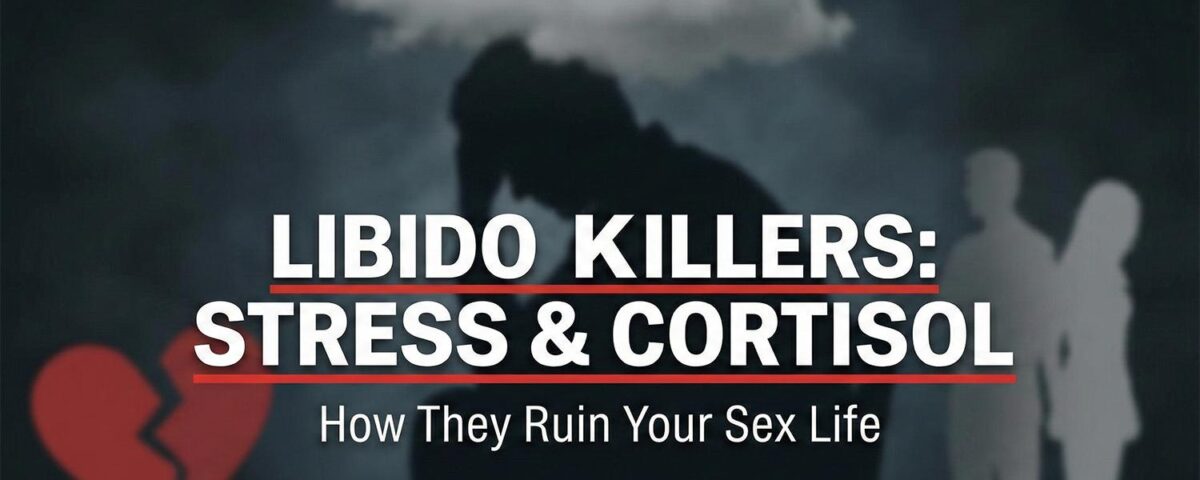
It is the most common complaint among men and women in high-performance environments: the mind is willing, but the body is not responding. You are training hard, eating well, and seemingly healthy, yet your sex drive has vanished.
While it is easy to blame age or relationship dynamics, the culprit is often chemical. In the modern world, chronic stress is not just a mental state; it is a physiological wrecking ball. The primary driver of this destruction is Cortisol.
Biologically speaking, your body has a hierarchy of needs. Survival always trumps reproduction. When stress signals are high, your body effectively “shuts down” the reproductive system to conserve energy for the perceived threat. This article explains the mechanism behind this shutdown—specifically the “Pregnenolone Steal”—and how to reverse it.
The HPA Axis: The Control Center
To understand libido, you must understand the HPA Axis (Hypothalamus-Pituitary-Adrenal). This is the communication network between your brain and your adrenal glands.
When you are stressed—whether from a heavy deadlift session, a looming work deadline, or lack of sleep—the hypothalamus signals the pituitary to tell the adrenals to release cortisol. In short bursts, this is healthy. Chronic activation, however, is catastrophic for your hormones.
The Biochemistry of Low Libido: The “Pregnenolone Steal”
This is the most critical concept to grasp. All steroid hormones, including Cortisol, Testosterone, Estrogen, and Progesterone, share a common ancestor: Cholesterol.
Cholesterol is converted into a “mother hormone” called Pregnenolone. Under normal conditions, Pregnenolone is distributed fairly to create both cortisol (for energy/stress) and sex hormones (DHEA, Testosterone). However, when chronic stress hits, the demand for cortisol skyrockets.
The body diverts the majority of Pregnenolone to produce Cortisol to manage the stress, leaving “crumbs” for DHEA and Testosterone production. This phenomenon is known as the Pregnenolone Steal. Effectively, your body is stealing the raw materials needed for your sex life to fuel your stress response.
The Nervous System: Fight or Flight vs. Rest and Reproduce
Beyond hormones, stress affects the nervous system’s ability to physically perform. Your Autonomic Nervous System has two main branches:
- Sympathetic (Fight or Flight): Activated by stress/cortisol. It causes vasoconstriction (tightening of blood vessels) to push blood to muscles and the heart.
- Parasympathetic (Rest and Digest): Activated by relaxation. It allows for vasodilation (widening of blood vessels), which is physically required for an erection and arousal.
You cannot be in both states simultaneously. If you are chronically stressed, you are stuck in Sympathetic dominance. Physiologically, blood flow is shunted away from the genitals. No amount of desire can overcome a nervous system that thinks it is being hunted by a predator.
Signs Your Libido Issues Are Stress-Related
How do you know if it’s stress or an organic medical issue? Stress-induced libido issues often present with specific markers:
- Morning Wood Disappears: Nocturnal erections are a sign of physical health. If they vanish during high-stress periods, it is likely hormonal suppression via cortisol.
- “Tired but Wired”: You feel exhausted but cannot sleep at night, a classic sign of dysregulated cortisol curves.
- Sugar Cravings: High cortisol dysregulates blood sugar, leading to intense cravings for quick energy.
Actionable Solutions: Reclaiming Your Drive
Fixing stress-induced low libido requires a multi-faceted approach. You must lower the demand for cortisol while supporting hormonal production.
1. Manage the Training Load
Overtraining is a form of physical trauma. If your gym performance is stalling and your libido is gone, your Central Nervous System (CNS) is fried. Implement a deload week where volume is cut by 50%. This allows the HPA axis to reset.
2. Adaptogens and Supplementation
Certain compounds help the body modulate its response to stress.
- Ashwagandha (KSM-66): clinically proven to lower serum cortisol levels and improve testosterone in stressed individuals.
- Magnesium & Zinc: Essential minerals often depleted by high stress.
3. Peptide Therapy
For those looking for a direct kickstart to libido while they manage their lifestyle factors, peptide therapy has become a leading intervention. Peptides like PT-141 (Bremelanotide) work on the nervous system directly to induce arousal, bypassing the vascular issues caused by stress.
You can explore these advanced options in our Peptides category.
4. Hormonal Reset (PCT)
If you have recently come off a cycle of performance enhancers, your “stress” might be the absence of endogenous production. In this case, your body needs a restart signal, not just stress management.
Utilizing a proper Post Cycle Therapy protocol is non-negotiable to restart the HPA axis and restore natural libido. Check our PCT category for the necessary compounds to restore balance.
Conclusion
A non-existent libido is your body’s “Check Engine” light. It is telling you that the load on your system—be it mental, physical, or chemical—is too high. Ignoring it won’t work, and neither will blindly taking generic libido pills without addressing the root cause.
By understanding the mechanics of the Pregnenolone Steal and actively managing your cortisol levels, you can signal to your body that the “war” is over, and it is safe to shift back into reproduction and recovery mode.
