
Cholesterol Management: HDL vs. LDL on Anabolics
October 4, 2025
Antidiabetic Meds Help Non-Diabetics Lose Weight?
October 17, 2025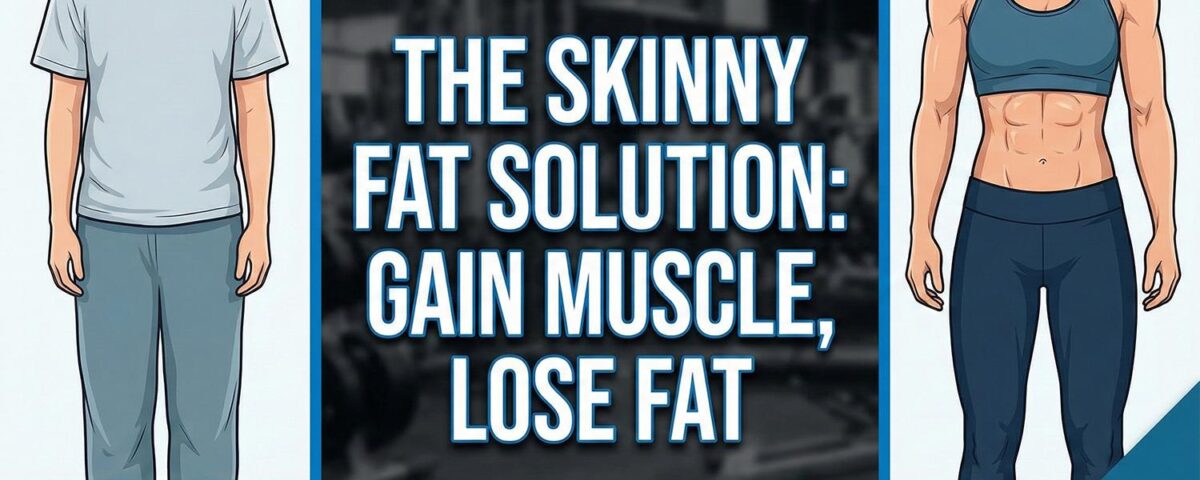
There is a specific physique that frustrates gym-goers more than any other: the “skinny fat” condition. You look thin in clothes, but underneath, there is a lack of muscle definition and a persistent layer of fat around the midsection.
Traditional advice fails this demographic. If you “bulk,” you just get fatter. If you “cut,” you look frail and lose what little muscle you have. This is because being skinny fat is not just a caloric issue—it is a metabolic and hormonal issue.
To fix this, you cannot simply choose to “lose weight” or “gain weight.” You must pursue Body Recomposition. This requires a precise manipulation of insulin sensitivity, protein synthesis, and training stimulus to build muscle and burn fat simultaneously.
The Physiology of “Skinny Fat”
Before we can fix the problem, we must understand the biological profile of the skinny fat individual (medically often referred to as TOFI: Thin Outside, Fat Inside). This profile typically includes:
- Poor Insulin Sensitivity: Your muscle cells resist absorbing nutrients, so carbohydrates are more likely to be stored as fat rather than glycogen.
- Low Muscle Mass: A lack of metabolically active tissue lowers your Basal Metabolic Rate (BMR), making fat loss difficult even at low calories.
- High Cortisol: Chronic stress often leads to visceral fat storage (belly fat) while simultaneously breaking down muscle tissue in the arms and legs.
The solution is not to starve yourself. The solution is to reprogram your partitioning—changing where your body sends the food you eat.
Step 1: The Nutrition Strategy (Cyclical Intake)
The biggest mistake skinny fat individuals make is chronic caloric restriction. Eating 1,500 calories a day flatlines your metabolism and spikes cortisol. Instead, you need Nutrient Timing.
Prioritize Protein
You must eat high protein (approx. 1g per pound of body weight). This is non-negotiable. Protein is thermogenic (it burns calories to digest) and is the only macronutrient that builds muscle.
Carbohydrate Cycling
Since insulin sensitivity is the enemy here, you must “earn” your carbs.
- Training Days: Moderate to High carbs centered exclusively around your workout (pre- and post-workout). This is when your muscles are most receptive to insulin.
- Rest Days: Low carbs, higher healthy fats. This forces the body to switch to burning fat for fuel while you recover.
Step 2: Training for Recomposition
Cardio is not the cure for skinny fat. In fact, excessive steady-state cardio (like hours on the treadmill) can make the problem worse by signaling muscle loss.
The Focus: Hypertrophy (Muscle Growth)
You need to send a loud signal to your body that muscle is necessary for survival. This means heavy compound movements (Squats, Deadlifts, Presses) in the 6–12 rep range.
Why? Muscle tissue is expensive to keep. By building more muscle, you increase your resting metabolic rate. You are essentially building a larger engine to burn more fuel 24/7.
Step 3: The Supplementation Stack
Supplements cannot fix a bad diet, but they can dramatically accelerate metabolic repair. For the skinny fat physiology, we focus on two goals: Insulin Management and Anabolic Support.
Glucose Disposal Agents (GDAs)
If your body struggles to handle carbs, you can help it. GDAs (like Berberine or R-ALA) help mimic the effects of insulin, driving glucose into muscle cells instead of fat cells. Taking a GDA with your post-workout meal can significantly improve nutrient partitioning.
For those looking to optimize how their body handles energy, explore our Metabolic Health solutions.
Creatine Monohydrate
The simplest, most effective tool. It increases cellular hydration and ATP production. For the skinny fat lifter, it provides the immediate strength boost needed to handle heavier weights, driving the hypertrophy stimulus.
L-Carnitine for Fat Mobilization
As discussed in previous articles, L-Carnitine is the shuttle that transports fatty acids into the mitochondria to be burned. This is particularly useful for stubborn visceral fat when combined with exercise.
Step 4: The Recovery Component
The “skinny” part of skinny fat often comes from high cortisol eating away at muscle. If you are sleeping 5 hours a night and drinking 4 coffees a day, you are keeping your body in a catabolic (breakdown) state.
The Fix:
- Sleep: 7-9 hours. This is when Growth Hormone is released.
- Stress Management: Consider adaptogens like Ashwagandha to lower cortisol.
If recovery is your bottleneck, consider viewing our specialized formulations in the Peptides & Recovery category to support systemic repair.
The Roadmap: What to Expect
Fixing a skinny fat physique takes time because you are chasing two rabbits at once (building muscle and losing fat). Here is the timeline:
| Phase | Duration | Goal |
|---|---|---|
| Phase 1: Metabolic Repair | Weeks 1-4 | Fix sleep, increase protein, start lifting. Weight may stay the same, but waist will shrink. |
| Phase 2: The Recomp | Weeks 5-12 | Strength goes up significantly. Muscle definition appears in shoulders/arms. Belly fat begins to mobilize. |
| Phase 3: The Optimization | Weeks 12+ | Insulin sensitivity is restored. You can now transition to a dedicated “bulk” or “cut” depending on preference. |
Conclusion: Consistency Over Intensity
You cannot sprint out of a skinny fat physique. It requires a measured, scientific approach to re-engineering your metabolism. Stop focusing on the scale—it will lie to you during recomposition. Focus on the mirror, your strength numbers, and your protein intake.
By prioritizing muscle growth and metabolic health over simple weight loss, you will not just get smaller—you will get better.
