

The Dopamine Detox: Resetting Your Reward System
September 26, 2025
The “Skinny Fat” Solution: Gaining Muscle While Losing Fat
October 13, 2025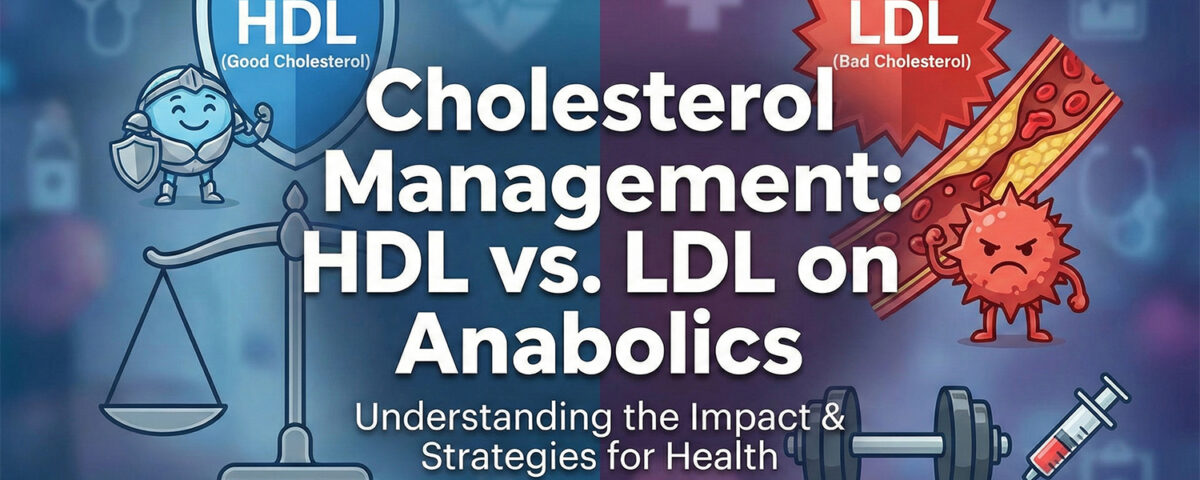
If you ask a bodybuilder what they fear most, they might say “losing muscle” or “gynecomastia.” But if you ask a cardiologist what a bodybuilder should fear most, the answer is unanimous: Dyslipidemia.
Cardiovascular disease is the primary cause of premature death in enhanced athletes. It isn’t the liver failure or the kidney stress that usually gets them; it is the silent accumulation of plaque in the arteries over a decade of cycling. The culprit is a skewed lipid profile: specifically, the ratio of High-Density Lipoprotein (HDL) to Low-Density Lipoprotein (LDL).
When you introduce exogenous androgens, you fundamentally alter how your liver processes fats. This article explains the biochemistry of steroid-induced cholesterol changes and provides a concrete strategy to manage your lipids without necessarily coming off cycle.
The Lipid Profile: The Good, The Bad, and The Ratio
To fix your blood work, you must understand what the numbers represent. Think of your bloodstream as a highway and cholesterol as vehicles.
- LDL (Low-Density Lipoprotein): The Delivery Truck.
LDL carries cholesterol from the liver to the cells to repair membranes. However, if there are too many trucks, they crash and spill their cargo on the side of the road (arterial walls). This builds up as plaque. - HDL (High-Density Lipoprotein): The Garbage Truck.
HDL cruises the bloodstream, picking up excess cholesterol and returning it to the liver to be excreted. This is “Reverse Cholesterol Transport.”
The Anabolic Problem: Anabolic steroids do not just increase the “Delivery Trucks” (LDL); they often obliterate the “Garbage Trucks” (HDL). It is common to see enhanced bodybuilders with LDL levels over 160 mg/dL and HDL levels in the single digits. This is a recipe for rapid atherosclerosis.
The Mechanism: Why Anabolics Destroy HDL
Why does this happen? It isn’t random toxicity. It is driven by an enzyme called Hepatic Triglyceride Lipase (HTGL).
Androgens—especially oral 17-alpha-alkylated steroids like Winstrol (Stanozolol), Anavar (Oxandrolone), and Dianabol—significantly upregulate HTGL activity in the liver. This enzyme breaks down HDL particles rapidly.
This is why you can run a high dose of injectable Testosterone and see only a mild drop in HDL, but add in 50mg of oral Winstrol, and your HDL can crash to 5 mg/dL within ten days. The oral route of administration, combined with the structural change of the drug, sends HTGL into overdrive, stripping your blood of its protective scavengers.
Injectables vs. Orals: Choosing Your Poison
If cardiovascular longevity is your goal, compound selection is everything.
The “Safe(r)” Zone: Testosterone & Nandrolone
Injectable bio-identical hormones (Testosterone) or mild derivatives (Deca Durabolin) have a moderate impact on lipids. While they will skew the ratio, they rarely cause the catastrophic single-digit HDL readings seen with orals.
The Danger Zone: Orals & SARMs
Oral steroids and many SARMs pass through the liver, triggering the HTGL response mentioned above. Winstrol is notoriously the worst offender, followed closely by Superdrol. If you are prone to cholesterol issues, oral cycles should be kept extremely short (4 weeks) or avoided entirely.
The Wildcard: Aromatase Inhibitors (AIs)
Estrogen is actually cardioprotective. It helps maintain healthy HDL levels. Bodybuilders who aggressively crush their estrogen with Arimidex or Letrozole often ruin their lipid profile inadvertently. Keeping estrogen in a physiological “sweet spot”—rather than zeroing it out—is crucial for heart health.
To manage your estrogen without crushing it, and to support your system post-cycle, ensure you have the right ancillaries. Check our PCT & Organ Support Category for proper estrogen management tools.
Nutritional Interventions: The First Line of Defense
Before adding more drugs to fix the side effects of drugs, look at your diet. The “See Food” diet (eating everything in sight to bulk) is a disaster for lipids.
1. Fiber is King
Soluble fiber binds to bile acids (made from cholesterol) in the gut and excretes them. This forces the liver to pull LDL from the blood to make more bile. Aim for 10-15g of soluble fiber daily (oats, psyllium husk, apples).
2. The Fats You Eat Matter
Saturated fats (butter, fatty beef, coconut oil) downregulate LDL receptors, meaning your liver stops pulling LDL out of the blood. While you need some saturated fat for hormone production, an enhanced athlete should prioritize Monounsaturated Fats (olive oil, macadamia nut oil, avocado). These fats are neutral or beneficial for the lipid profile.
The Supplement Stack: Clinical Support
Specific supplements have robust data showing they can mitigate steroid-induced dyslipidemia.
1. Citrus Bergamot (The Heavy Hitter)
If you take one heart supplement, this is it. Clinical trials show that 500mg-1000mg of Citrus Bergamot can lower LDL significantly and, crucially, raise HDL. It works by inhibiting the same enzyme pathway as statins but much more gently.
2. Niacin (Vitamin B3)
Niacin is one of the few agents known to increase HDL. However, you need the “flushing” kind (Nicotinic Acid), not the “flush-free” kind (Inositol Hexanicotinate), which is useless.
Protocol: Start low (500mg) at night to manage the flush, and titrate up.
3. High-Dose Omega-3 (Fish Oil)
You cannot take two capsules and call it a day. To impact blood lipids (specifically triglycerides), you need 3 to 4 grams of combined EPA/DHA daily. This reduces systemic inflammation and blood viscosity.
4. Cardarine (GW-501516)
While technically a research chemical, Cardarine is a PPAR-delta agonist known for its ability to drastically reverse lipid issues. It switches the body’s energy preference to fatty acids and has been shown in studies to raise HDL remarkably.
For those exploring advanced metabolic agents to aid in lipid management and fat oxidation, view our Metabolic Health & Weight Loss Category.
Pharmaceutical Intervention: When to Call the Doctor
If your LDL is persistently >190 mg/dL or your Calcium Score is non-zero, supplements may not be enough. In these cases, pharmacotherapy is harm reduction.
- Ezetimibe: Prevents the absorption of cholesterol in the gut. It is often preferred by bodybuilders over statins because it does not cause muscle weakness or cramps.
- Statins (e.g., Rosuvastatin): The gold standard for lowering LDL. While some bodybuilders fear they lower testosterone, the risk-to-reward ratio for someone with dangerous plaque buildup heavily favors the statin. Using a low dose (5mg) can be highly effective with minimal side effects.
Conclusion
Building a physique is a marathon, not a sprint. If your arteries clog up at age 45, it doesn’t matter how big your biceps were at age 25.
You must respect the biochemistry of what you are putting into your body. Oral steroids and unchecked estrogen management are the enemies of your heart. By understanding the mechanism of Hepatic Lipase and utilizing tools like Citrus Bergamot, fiber, and intelligent cycle design, you can protect your pump—and the heart that drives it.
