

The Impact of Stress on Heart Health and Ways to Reduce It
August 23, 2024
Carnitine and Lipolysis: Turning Fat Stores into Energy
September 1, 2024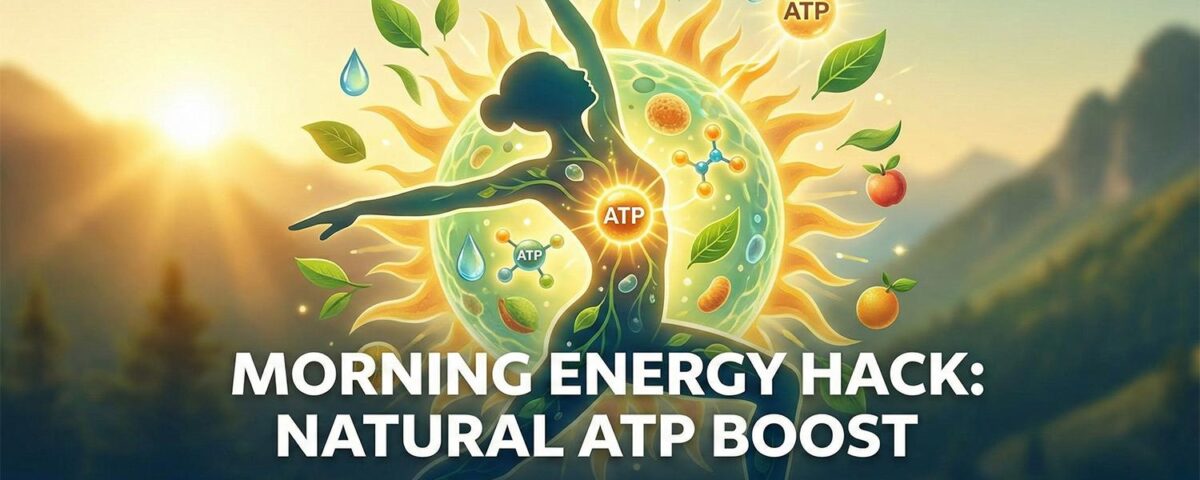
For millions of people, the morning routine is identical: wake up groggy, stumble to the kitchen, and brew a strong cup of coffee. Only after that first hit of caffeine does the brain seem to come online.
But there is a flaw in this strategy. Caffeine does not create energy; it merely borrows it. It blocks adenosine receptors (the chemical that makes you tired) and spikes cortisol. Eventually, that debt must be paid, leading to the dreaded afternoon crash.
True energy—the kind that feels limitless and stable—comes from the cellular level. It comes from ATP (Adenosine Triphosphate). If you want to hack your morning energy, you don’t need more stimulation; you need better mitochondrial function.
This guide explains the science of cellular energy and provides a protocol to switch your body’s power plant on naturally, before you even touch a coffee mug.
The Science: What is ATP?
Think of your body like a hybrid car. Caffeine is the turbo button, but ATP is the fuel in the tank. ATP is the biochemical currency of life. Every time your heart beats, your neurons fire, or your muscles contract, you are “spending” ATP.
Your ATP is produced in the mitochondria—tiny organelles inside your cells. When your mitochondria are sluggish (due to aging, stress, or poor diet), you feel fatigue that no amount of espresso can fix. The goal of this “hack” is to optimize the Electron Transport Chain so your body produces energy efficiently on its own.
Step 1: The Ignition (Morning Light)
The single most effective way to boost ATP production starts the moment you open your eyes. You must expose your eyes and skin to natural morning sunlight.
The Mechanism:
Sunlight contains a spectrum of red and near-infrared (NIR) light. This light penetrates your skin and interacts with an enzyme in your mitochondria called Cytochrome C Oxidase. This interaction essentially “charges” the water inside your cells, allowing your mitochondria to produce ATP more efficiently.
- The Protocol: Go outside for 10-20 minutes within an hour of waking.
- No Windows: Glass blocks the beneficial spectrums. You must be outdoors (or use a dedicated Red Light Therapy panel).
Step 2: The Conductor (Hydration & Electrolytes)
ATP production is an electrical process. Your mitochondria rely on a voltage gradient to generate energy. If you are dehydrated, that voltage drops.
After 8 hours of sleep, you are naturally dehydrated. Drinking plain water is good, but drinking water with electrolytes (Sodium, Potassium, Magnesium) is better. Electrolytes increase the conductivity of your fluids, allowing the electrical signals that drive energy production to fire rapidly.
Key Takeaway: Drink 500ml of water with a pinch of sea salt or an electrolyte packet before your morning coffee. This restores the electrochemical gradient your cells need to work.
Step 3: The Fuel (Targeted Supplementation)
While lifestyle sets the stage, pharmaceutical-grade supplementation provides the raw materials. Specific compounds act as cofactors in the Krebs Cycle (the process of making ATP).
1. Coenzyme Q10 (Ubiquinol)
CoQ10 is the “spark plug” of the cell. It shuttles electrons down the transport chain. Without enough CoQ10, ATP production stalls. Levels naturally decline with age and stress.
2. PQQ (Pyrroloquinoline Quinone)
While CoQ10 helps existing mitochondria work better, PQQ helps you grow new mitochondria (a process called mitochondrial biogenesis). More mitochondria = more total energy capacity.
3. Creatine Monohydrate
Often pigeonholed as a muscle builder, Creatine is actually an energy recycler. It donates a phosphate group to ADP (spent energy) to turn it back into ATP (usable energy). It is particularly effective for “brain fog,” as the brain is a massive consumer of energy.
Looking to upgrade your cellular engine? Explore our Metabolic Health & Energy collection for high-purity mitochondrial support.
Step 4: The Demand (Movement)
Your body is efficient; it will not produce excess energy if there is no demand for it. To signal your body to ramp up ATP production, you need to move.
You don’t need a grueling hour-long workout. You need hormetic stress—a short burst of intensity that wakes up the system.
- Zone 2 Cardio: A brisk walk (where you can still hold a conversation) improves mitochondrial efficiency over time.
- Tabata Sprints: 4 minutes of high-intensity movement (e.g., air squats or burpees) forces the mitochondria to work at maximum capacity, creating an “afterburn” effect of energy.
Step 5: The “No-Crash” Protocol Checklist
Putting it all together, here is the ultimate morning routine for natural, sustained energy:
- Wake Up: Do not hit snooze (fragmented sleep increases grogginess).
- Hydrate: 500ml water + Electrolytes immediately.
- Light: 10 mins of outdoor sun or Red Light Therapy.
- Move: 5 mins of intense movement or 20 mins of brisk walking.
- Fuel: Take your CoQ10 and Creatine stack.
- Caffeine: Wait 90 minutes after waking before your first coffee. This allows your natural cortisol curve to peak and prevents the afternoon crash.
Conclusion: Energy isn’t something you buy at a coffee shop; it’s something your body generates. By respecting your biology and providing the right inputs—light, water, movement, and nutrients—you can turn your body into a high-performance machine.
Ready to optimize your daily performance? Browse our General Health & Wellness category to find the foundational supplements your body needs.
