

The Morning Energy Hack: Boosting ATP Production Naturally
August 28, 2024
The Importance of Sleep for Athletes
September 17, 2024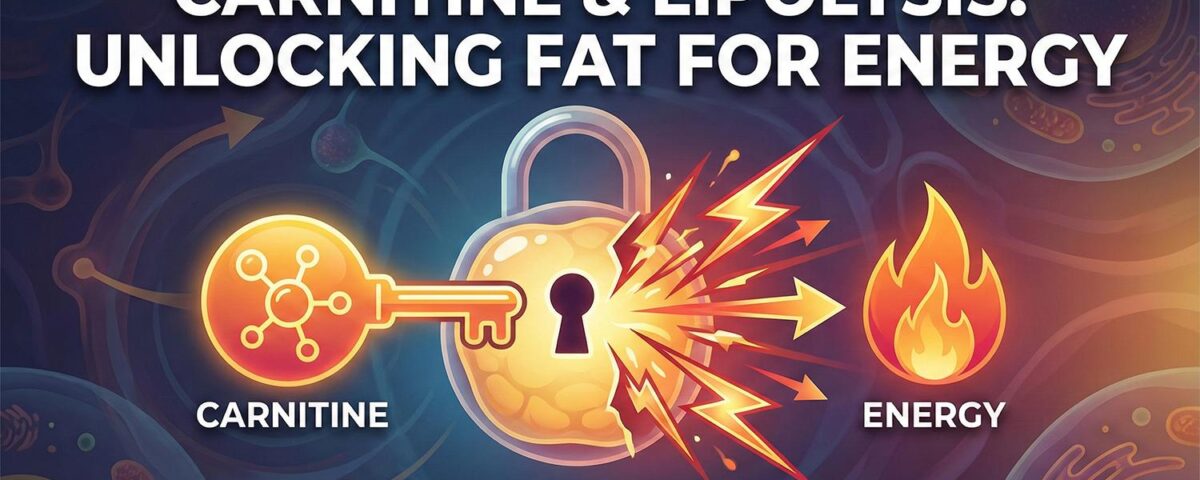
In the world of physique enhancement and metabolic health, few compounds are as misunderstood as Carnitine. Often relegated to the shelves of generic “fat burners,” its true physiological role is far more complex—and vital—than simple weight loss marketing suggests.
For athletes and individuals focused on body composition, understanding the relationship between Carnitine and lipolysis is essential. It is not a stimulant that simply ramps up your heart rate; it is a physiological transporter that dictates how your body utilizes fuel.
To put it simply: without adequate Carnitine, your body struggles to access its own fat stores for energy, regardless of how hard you train. This article breaks down the science of the “Carnitine Shuttle,” the process of lipolysis, and how to leverage this amino acid derivative for peak metabolic efficiency.
The Physiology of Fat Loss: What is Lipolysis?
Before understanding Carnitine, we must define lipolysis. Lipolysis is the biological process of breaking down triacylglycerols (stored fat) in adipose tissue into free fatty acids and glycerol. These fatty acids are then released into the bloodstream to be used as fuel.
However, releasing fat into the blood is only step one. Floating fatty acids do not equate to fat loss; they must be oxidized (burned). This is where the metabolic bottleneck often occurs, and where Carnitine becomes the critical variable.
The Carnitine Shuttle: The Gatekeeper of Metabolism
The mitochondria are the “power plants” of your cells. This is where fatty acids must go to be burned for energy (ATP) via a process called beta-oxidation. However, long-chain fatty acids cannot penetrate the inner mitochondrial membrane on their own. They are chemically unable to pass through the gate.
This is where L-Carnitine acts as the biological ferry.
Step-by-Step: How the Shuttle Works
- Activation: Fatty acids in the cell are converted into fatty acyl-CoA.
- The Transfer: An enzyme called Carnitine Palmitoyltransferase 1 (CPT1) attaches Carnitine to the fatty acid.
- Transport: This new “acyl-carnitine” complex is transported across the mitochondrial membrane.
- Oxidation: Once inside, the Carnitine detaches and returns to the outside to pick up more fat, while the fatty acid undergoes beta-oxidation to produce energy.
Key Takeaway: Carnitine is the rate-limiting step in fat oxidation. If your Carnitine levels are insufficient, the “shuttle” stops, and fatty acids cannot enter the mitochondria to be burned, regardless of your caloric deficit.
Beyond Fat Loss: Performance and Recovery
While the aesthetic benefits of enhanced lipolysis are the primary draw for many, the impact of Carnitine on performance is equally significant. By optimizing the body’s ability to burn fat, you spare muscle glycogen.
When your body becomes efficient at oxidizing fat for fuel during low-to-moderate intensity exercise, it preserves stored carbohydrates (glycogen) for high-intensity bursts. This “glycogen sparing” effect can significantly extend endurance and delay fatigue.
Furthermore, research suggests that L-Carnitine L-Tartrate (a specific form of the compound) plays a role in androgen receptor density and recovery, making it a staple in advanced supplementation protocols.
Forms of Carnitine: Selecting the Right Tool
Not all Carnitine is created equal. The bioavailability and specific benefits depend heavily on the chemical structure of the supplement you choose. When sourcing from high-quality vendors like Aavelone Pharma, it is crucial to match the form to your specific goals.
1. L-Carnitine (Base)
The standard form, often used for general metabolic support. While effective, it sometimes requires insulin to be properly absorbed into muscle tissue, which is why it is often paired with carbohydrates.
2. Acetyl-L-Carnitine (ALCAR)
This form can cross the blood-brain barrier. While it supports lipolysis, it is primarily chosen for cognitive benefits, focus, and neuroprotection. It is excellent for athletes who need mental clarity during grueling sessions.
3. Injectable L-Carnitine
For advanced users, injectable administration is often the gold standard. Oral Carnitine has notoriously poor bioavailability (often less than 20%). Injectable forms bypass the digestive system, ensuring 100% bioavailability and rapid uptake into the muscle tissue where it is needed most.
Optimizing Your Protocol: Dosage and Timing
To maximize the Carnitine Shuttle and enhance lipolysis, timing and consistency are key. Carnitine is not an acute stimulant; it works best when muscle saturation levels are optimized over time.
- Dosage: Clinical studies often range from 2g to 4g per day depending on the form and administration method.
- Timing: Pre-workout is the most common timing window to ensure free carnitine is available during the period of highest energy demand.
- Synergy: Carnitine works best in a hormonal environment conducive to fat loss. Combining it with a structured training program and potentially other metabolic agents can amplify results.
For those looking to build a comprehensive stack, consider exploring the Peptides category to see how metabolic enhancers can work synergistically with mitochondrial optimizers.
Safety and Realistic Expectations
As with any pharmaceutical or supplement intervention, responsible use is paramount. Carnitine is naturally produced in the body and found in meat products, making it generally safe for healthy adults. However, high oral doses can cause digestive upset in some individuals.
It is important to remember that L-Carnitine is a facilitator, not a miracle worker. It opens the door for fat loss, but you must still do the work to walk through it. Without a caloric deficit or energy expenditure (exercise), moving fat into the mitochondria will not result in significant weight loss if the energy is not required by the body.
Conclusion
Turning fat stores into energy is a complex biological dance, but Carnitine is undoubtedly the choreographer. By ensuring your mitochondrial transport system is functioning at peak capacity, you ensure that the effort you put into the gym translates into tangible changes in body composition.
Whether you are looking to shed the last few pounds of stubborn body fat or improve your metabolic flexibility for endurance events, optimizing your Carnitine levels is a scientifically sound strategy.
