

Mindful Eating: How to Develop Healthy Eating Habits
April 20, 2023
How to get fit like an Athlete
April 22, 2023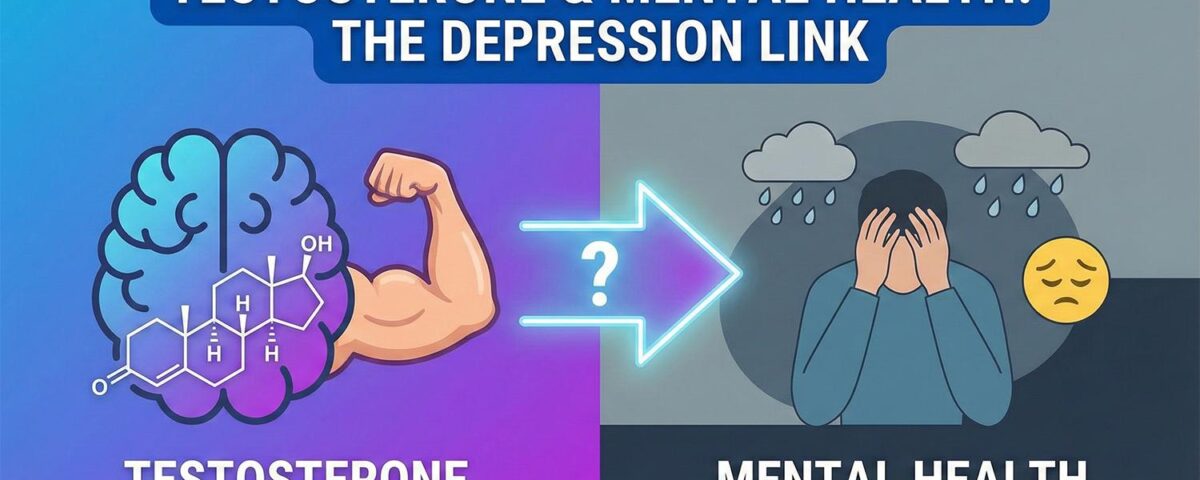
For decades, mental health and physical health were treated as separate entities. If you had low energy and low mood, you were sent to a therapist. If you couldn’t build muscle, you were sent to a trainer.
Modern endocrinology has shattered this divide. We now know that Testosterone is not just an anabolic hormone; it is a powerful neurosteroid.
For many men, the symptoms of “depression”—apathy, brain fog, lack of drive, and irritability—are not purely psychological. They are physiological signals of a hormonal crash. Understanding the link between your endocrine system and your neurotransmitters is often the missing piece in the mental health puzzle.
The Neurosteroid Connection: How T Affects the Brain
Most people associate testosterone with biceps and libido. However, androgen receptors are densely packed in the brain, specifically in areas responsible for learning, memory, and emotional regulation, such as the hippocampus and the amygdala.
When testosterone molecules cross the blood-brain barrier, they influence the production and uptake of critical neurotransmitters:
- Dopamine: The “drive” molecule. Testosterone increases dopamine receptor density. Low T often manifests not as sadness, but as a lack of motivation or “zest” for life.
- Serotonin: The “well-being” molecule. Testosterone helps regulate serotonin transporters. A deficiency here leads to anxiety and irritability.
- Acetylcholine: Critical for focus and memory. This is why “brain fog” is a hallmark symptom of hypogonadism (Low T).
Key Takeaway: If your hormones are suboptimal, your brain chemistry cannot function at its peak. You cannot “think” your way out of a hormonal deficiency.
Is it Clinical Depression or “Male Hypogonadism”?
Distinguishing between clinical depression and Low T is difficult because the symptoms overlap significantly. However, there are nuance differences in how they present in men.
| Symptom Cluster | Clinical Depression (Classic) | Low Testosterone (Hypogonadism) |
|---|---|---|
| Emotional State | Persistent sadness, hopelessness, guilt. | Apathy, emotional “numbness,” irritability. |
| Physicality | Change in appetite, sleep disturbance. | Loss of morning erections, joint pain, muscle loss. |
| Cognition | Negative thought loops, self-criticism. | Forgetfulness, inability to focus, “brain fog.” |
| Motivation | “I don’t want to do anything.” | “I want to do things, but I physically can’t muster the energy.” |
If you find yourself identifying more with the “Low T” column—specifically the physical loss of vitality combined with mental apathy—bloodwork should be your first step, not antidepressants.
The Cortisol-Testosterone Seesaw
The relationship between stress and testosterone is antagonistic. They function like a seesaw: when one goes up, the other usually goes down.
Cortisol is your primary stress hormone. In short bursts (like a workout), it is beneficial. Chronically elevated cortisol (from work stress, poor sleep, or trauma) suppresses the hypothalamic-pituitary-gonadal (HPG) axis, effectively shutting down testosterone production.
Conversely, healthy Testosterone levels blunt the body’s response to stress. Testosterone acts as a “shield,” preventing cortisol from wreaking havoc on your system. When T is low, you lose this shield. Minor stressors (traffic, a work email) trigger massive anxiety responses because your hormonal buffer is gone.
Managing this stress response is critical. For those looking to support their body’s stress resilience and energy systems, we recommend exploring our Metabolic Health solutions.
Inflammation: The Silent Killer of Mood
New research points to the “Cytokine Theory of Depression.” Systemic inflammation (caused by visceral fat, poor diet, or autoimmune issues) releases pro-inflammatory cytokines. These cytokines can cross into the brain and reduce dopamine production, leading to depressive symptoms.
Where does T fit in? Testosterone is a potent anti-inflammatory. Men with normal T levels tend to have lower levels of these inflammatory markers. By optimizing testosterone, you reduce systemic inflammation, thereby lifting the chemical “weight” off your brain.
Action Plan: Reclaiming Your Mental Edge
If you suspect your mood issues are hormonal, here is the protocol regarding assessment and action.
1. Get the Right Bloodwork
Do not settle for “Total Testosterone.” You need a comprehensive panel to see the full picture:
- Free Testosterone: The amount of hormone actually available to your brain and muscles.
- SHBG (Sex Hormone Binding Globulin): If this is too high, it binds up your T, making it useless.
- Estradiol (E2): Too low or too high can both cause mood instability.
- Thyroid Panel (TSH, T3, T4): Hypothyroidism mimics Low T symptoms almost perfectly.
2. Lifestyle “First Aid”
Before considering TRT (Testosterone Replacement Therapy), you must address the basics. Sleep is when your endocrine system resets. If you are sleeping 5 hours a night, you are chemically castrating yourself.
Furthermore, heavy lifting and high-fat/moderate-carb diets support cholesterol production, which is the raw material for testosterone.
3. Supplementation for Hormonal Support
While no supplement replaces TRT for true hypogonadism, certain compounds can support natural production and receptor sensitivity:
- Zinc & Magnesium: Essential co-factors for testosterone synthesis.
- Ashwagandha: Clinically shown to lower cortisol, which indirectly allows T levels to recover.
- Tongkat Ali: May help lower SHBG, freeing up more testosterone.
For athletes and individuals looking to optimize their physical and mental drive, proper supplementation is key. Browse our Sports Performance category for products designed to support intensity and focus.
Conclusion: The Mind-Body Mirror
Your brain is not an island. It is an organ that swims in the chemical soup of your blood. If that soup is deficient in testosterone, your mental state will suffer.
Depression is a serious clinical condition, and this article is not medical advice. However, if you are a man over 30 feeling a loss of “mojo,” apathy, and fatigue, do not ignore the hormonal component. Fixing your physiology is often the first step toward healing your psychology.
