

Melanotan II Myths: Safe Tanning Without the Sunburn
June 12, 2025
Nervous System Health and Mental Well-being: A Vital Connection
June 14, 2025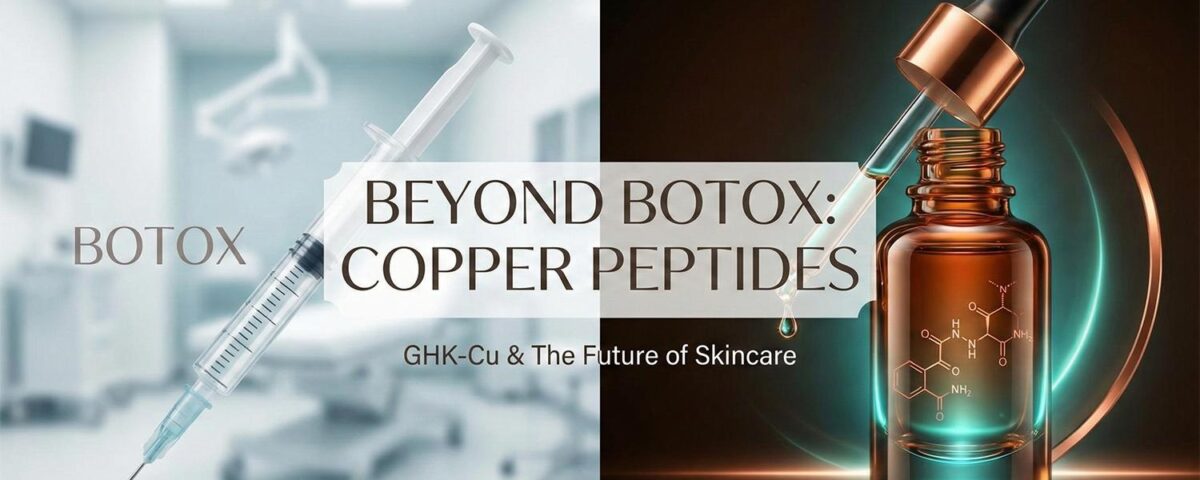
For the last two decades, the anti-aging industry has been dominated by a single philosophy: paralysis. The gold standard for wrinkles—Botulinum toxin (Botox)—works by freezing the muscles underneath the skin. It is effective, but it is effectively a “pause button” on aging, not a reversal.
However, a shift is occurring in the world of dermatology and bio-hacking. The conversation is moving away from neurotoxins and toward bioregulators. We are no longer asking, “How do we hide this wrinkle?” We are asking, “How do we repair the skin structure that allowed the wrinkle to form?”
Enter GHK-Cu (Copper Peptide). Unlike Botox, which masks the symptoms of aging, GHK-Cu works to reverse the biological clock of the skin cells themselves. This is the science of skin remodeling, and it is the future of aesthetics.
What is GHK-Cu? The Science of Regeneration
GHK-Cu is a naturally occurring copper complex that was first identified in human plasma in 1973 by Dr. Loren Pickart. He discovered that liver tissue from older patients could be revitalized when exposed to blood from younger patients. The active agent responsible for this rejuvenation was isolated as GHK-Cu.
In your 20s, your blood is rich in GHK-Cu (approx. 200 ng/mL). By age 60, that level drops by nearly 60% (to approx. 80 ng/mL). This decline correlates directly with the visible signs of aging: thinner skin, slower wound healing, and wrinkle formation.
GHK-Cu is a Signal Peptide. Think of it as a key that unlocks specific genetic codes in your DNA. When applied or administered, it resets the gene expression of your skin cells to a younger, healthier state.
Mechanism of Action: Remodeling vs. Freezing
To understand why Copper Peptides are superior to traditional cosmetic interventions for long-term health, we must look at the mechanism of Skin Remodeling.
Aging skin is characterized by a breakdown of the “Extracellular Matrix” (ECM)—the scaffolding of collagen and elastin that holds your face up. GHK-Cu does not just stimulate new growth; it actively removes damaged scar tissue and replaces it with healthy tissue.
1. Massive Collagen Synthesis
While Retinol is famous for boosting collagen, GHK-Cu is arguably more potent. Studies have shown that GHK-Cu can stimulate collagen production by up to 70%, outperforming Vitamin C and Tretinoin in clinical trials. Crucially, it promotes both Type I and Type III collagen.
2. The Anti-Inflammatory Powerhouse
Inflammation is the root of “Inflammaging.” Chronic micro-inflammation destroys collagen. GHK-Cu is a potent antioxidant that neutralizes free radicals and suppresses inflammatory cytokines (specifically IL-6 and TNF-alpha). This reduces redness and protects the skin from UV damage.
3. DNA Repair
Perhaps most impressively, GHK-Cu has been shown to reset the activity of thousands of human genes. It upregulates genes involved in tissue repair and downregulates genes involved in tissue destruction. It is literally reprogramming your skin cells to behave as they did when you were younger.
GHK-Cu vs. Botox: A Comparative Analysis
Is GHK-Cu a replacement for Botox? Not exactly. They serve different purposes, but for true anti-aging, GHK-Cu offers benefits Botox cannot touch.
| Feature | Botox (Neurotoxin) | GHK-Cu (Signal Peptide) |
|---|---|---|
| Mechanism | Paralyzes muscle to stop movement | Regenerates skin structure & DNA |
| Skin Quality | No direct improvement | Increases thickness, elasticity, & clarity |
| Results | Instant (3-7 days) | Cumulative (4-12 weeks) |
| Scarring | No effect | Active wound healing & scar reduction |
The Verdict: Botox stops the wrinkle from deepening, but GHK-Cu rebuilds the skin so the wrinkle is less likely to form in the first place.
Beyond the Face: Hair Growth and Wound Healing
The benefits of Copper Peptides extend beyond facial aesthetics. Because it is an angiogenic agent (promoting new blood vessel formation), it improves blood flow to the hair follicles.
Research indicates that GHK-Cu can increase hair follicle size and inhibit follicle miniaturization, making it a powerful adjunct to hair loss protocols. It creates a healthy scalp environment, which is the prerequisite for hair growth.
For those interested in the regenerative power of peptides beyond skincare, such as systemic healing and injury recovery, explore our Peptides Category for compounds like BPC-157.
How to Incorporate GHK-Cu Into Your Regimen
Using Copper Peptides requires a bit more knowledge than your standard moisturizer. It is a bioactive compound that commands respect.
1. Forms of Administration
- Topical Serums: The most common method. Look for the distinct bright blue color—this indicates the presence of copper ions. If the product is clear, the concentration is likely negligible.
- Injectable (Mesotherapy/SubQ): For advanced bio-hackers, GHK-Cu is often administered subcutaneously or via micro-needling for deeper systemic effects and rapid wound healing.
2. The “Blueies” Effect
High-concentration GHK-Cu is potent. Users of high-strength topicals or injectables sometimes experience a phenomenon known as “The Blueies”—a temporary fatigue or lethargy caused by a rapid drop in zinc levels. Copper and Zinc are antagonists; when copper goes up, zinc goes down.
Pro Tip: Ensure you are supplementing with Zinc if you are running a high-dose Copper Peptide protocol to maintain mineral balance.
3. Compatibility: What Not to Mix
Copper Peptides are fragile. Do not mix them with:
- Vitamin C (L-Ascorbic Acid): The low pH of Vitamin C can break the bond between the copper ion and the peptide, rendering both ineffective. Use Vitamin C in the morning and Copper Peptides at night.
- Retinoids (Tretinoin/Retinol): While they can be used in the same week, using them at the exact same time can increase sensitivity. Alternate nights for best results.
Realistic Expectations: The Timeline
We live in an era of instant gratification, but biological remodeling takes time. GHK-Cu is not a quick fix; it is an investment in your cellular architecture.
- Month 1: Improved skin hydration and reduction in inflammation/redness.
- Month 3: Noticeable increase in skin density (thickness) and elasticity. Fine lines begin to soften.
- Month 6: Significant remodeling of scar tissue, reduction in deep wrinkles, and “tightening” of the skin (especially around the jawline and eyes).
If you are looking for other metabolic enhancers to improve your overall wellness and body composition alongside your skincare routine, check out our Weight Loss & Metabolic Health options.
Conclusion
The future of skincare is not about freezing your face into a static mask; it is about restoring the dynamic, regenerative capabilities of your youth. GHK-Cu represents the pinnacle of this philosophy.
By leveraging the power of this signal peptide, you aren’t just treating the surface—you are communicating with your DNA to rebuild a younger, stronger, and more resilient version of yourself. It is time to look beyond Botox and embrace the science of regeneration.
