
Hair Loss Prevention: Keeping Your Hairline While on Cycle
August 14, 2024
The Impact of Stress on Heart Health and Ways to Reduce It
August 23, 2024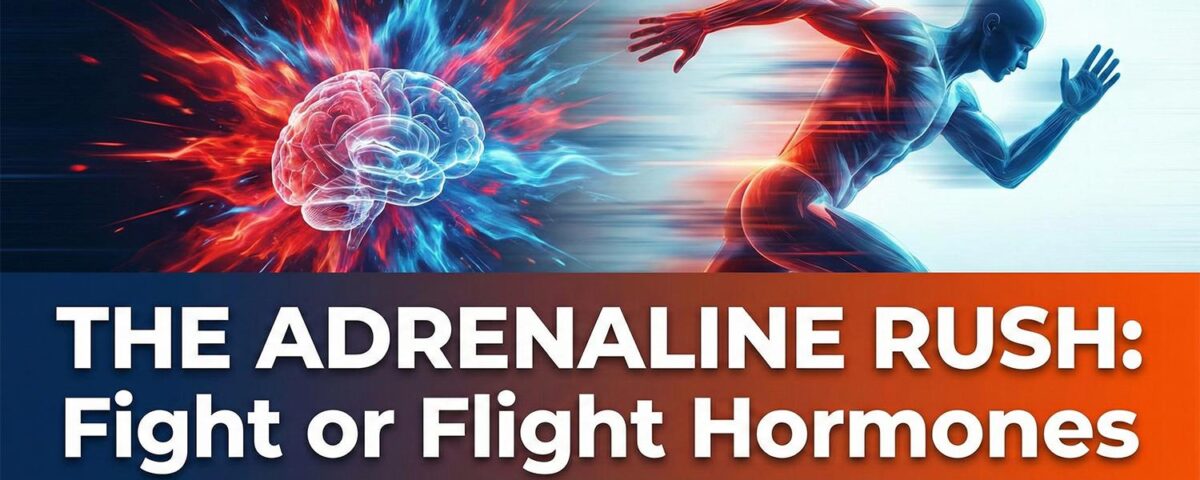
We have all felt it. A car swerves into your lane. You miss a step on a staircase. A sudden loud noise shatters the silence.
In a split second, before your conscious mind even registers the threat, your body transforms. Your heart hammers against your ribs, your vision tunnels, and time seems to slow down. This is the Adrenaline Rush—nature’s most potent survival mechanism.
But while this “fight or flight” response was designed to save us from predators, in the modern world, it is often triggered by traffic jams, emails, and deadlines. Understanding the biochemistry behind this rush is the key to mastering your stress, optimizing your performance, and preventing the burnout that comes from living in “survival mode” 24/7.
The Anatomy of the Rush: The HPA vs. SAM Axis
To understand the rush, we must look at the control center: the brain. Specifically, the Amygdala. Think of the amygdala as your brain’s smoke detector. When it perceives danger, it bypasses the logic center (the prefrontal cortex) and sends a distress signal to the Hypothalamus.
This triggers two distinct systems:
1. The Instant Reaction: The SAM Axis
The Sympathetic-Adreno-Medullary (SAM) axis is the “lightning” strike. Nerves send direct electrical signals to the adrenal medulla (the center of your adrenal glands), forcing them to flood the bloodstream with Catecholamines (Adrenaline and Norepinephrine). This happens in milliseconds.
2. The Sustained Reaction: The HPA Axis
The Hypothalamic-Pituitary-Adrenal (HPA) axis is the “thunder” that follows. It is a hormonal cascade that releases Cortisol. This process takes minutes to fully activate and is designed to keep you alert if the danger persists.
Meet the Chemical Players
The “rush” isn’t just one hormone; it is a sophisticated cocktail. Here are the three main ingredients:
1. Epinephrine (Adrenaline): The Igniter
This is the pure fuel. When Epinephrine hits your system, it binds to receptors on the heart and lungs.
- Bronchodilation: The airways relax and open wide to intake more oxygen (this is why Epinephrine is used in EpiPens for allergic reactions).
- Glycogenolysis: The liver dumps stored glucose (sugar) into the bloodstream for instant energy.
- Analgesia: Pain perception is temporarily blunted so you can keep running or fighting even if injured.
2. Norepinephrine (Noradrenaline): The Focuser
While chemically similar to adrenaline, Norepinephrine acts primarily as a neurotransmitter in the brain and a vasoconstrictor in the body.
- Vasoconstriction: It clamps down blood vessels in non-essential areas (like the skin and digestive system) to shunt blood toward muscles. This is why you get pale or get “cold feet” when scared.
- Laser Focus: It sharpens alertness and arousal, clearing away mental fog instantly.
3. Cortisol: The Sustainer
Cortisol is not part of the initial “rush,” but it is vital for the aftermath. It curbs non-essential functions like the immune system and digestion to preserve energy. It essentially says, “Stop repairing tissues; we have a tiger to fight.”
Feeling constantly on edge? Support your body’s stress response with our Mental Health & Nootropics collection designed to balance neurotransmitters.
The Double-Edged Sword: Acute vs. Chronic
Context is everything. The adrenaline rush is neither “good” nor “bad”—it depends on duration.
The Good: Performance and Survival
In acute bursts, this system is a superpower. It allows powerlifters to lift record weights (hysterical strength), helps public speakers perform with high energy, and saves lives in emergencies.
The Bad: Chronic Hijacking
The problem arises when the alarm never shuts off. If you are chronically stressed, your SAM and HPA axes are constantly dripping stress hormones. This leads to:
- Hypertension: Constant vasoconstriction damages blood vessels.
- Weight Gain: Chronic cortisol keeps blood sugar high, leading to insulin resistance and belly fat storage.
- Anxiety and Insomnia: With Norepinephrine constantly high, the brain cannot wind down for sleep.
Adrenal Dysfunction: When the Tank Runs Dry
You may have heard the term “Adrenal Fatigue.” While medically controversial, the symptoms are very real. A more accurate term is HPA Axis Dysregulation.
Your adrenal glands do not “tire out” and stop producing hormones. Instead, the feedback loop gets broken. The brain becomes desensitized to the signals, leading to a state where you feel “tired but wired”—exhausted during the day but unable to sleep at night due to erratic cortisol spikes.
Managing the Rush: How to Reset
You cannot eliminate stress, but you can train your response to it. Here are scientifically proven methods to dampen an overactive fight-or-flight response.
1. The Physiological Sigh
Research from neurobiologists shows that breathing is the fastest way to hack the nervous system. A “Physiological Sigh” (two short inhales through the nose, followed by one long exhale through the mouth) manually triggers the Vagus Nerve to slow the heart rate and lower adrenaline.
2. Pharmacological Support (Beta-Blockers)
For those with severe performance anxiety (like public speaking or tremors), medications known as Beta-Blockers (e.g., Propranolol) are often used. They block the adrenaline receptors on the heart, preventing the physical symptoms (pounding heart, shaking hands) without affecting the mental clarity.
3. Adaptogens
Compounds like Ashwagandha and Rhodiola Rosea modulate the HPA axis. They help lower baseline cortisol levels, raising the threshold for what triggers a stress response.
Looking to regulate your cortisol levels? Explore our General Health & Wellness category for premium adaptogens and stress support.
Conclusion: Master Your Biology
Adrenaline is a tool. When respected and managed, it provides the focus and energy required to excel in high-stakes environments. When ignored, it becomes a corrosive force that undermines your long-term health.
By understanding the mechanics of the HPA axis, you can stop being a passive victim of your hormones. Through breathwork, proper recovery, and targeted supplementation, you can ensure that your “fight or flight” response remains a temporary superpower, not a permanent state of being.
