

Male Estradiol Levels by Age: Importance, Impact, and How to Manage
September 18, 2025
The Dopamine Detox: Resetting Your Reward System
September 26, 2025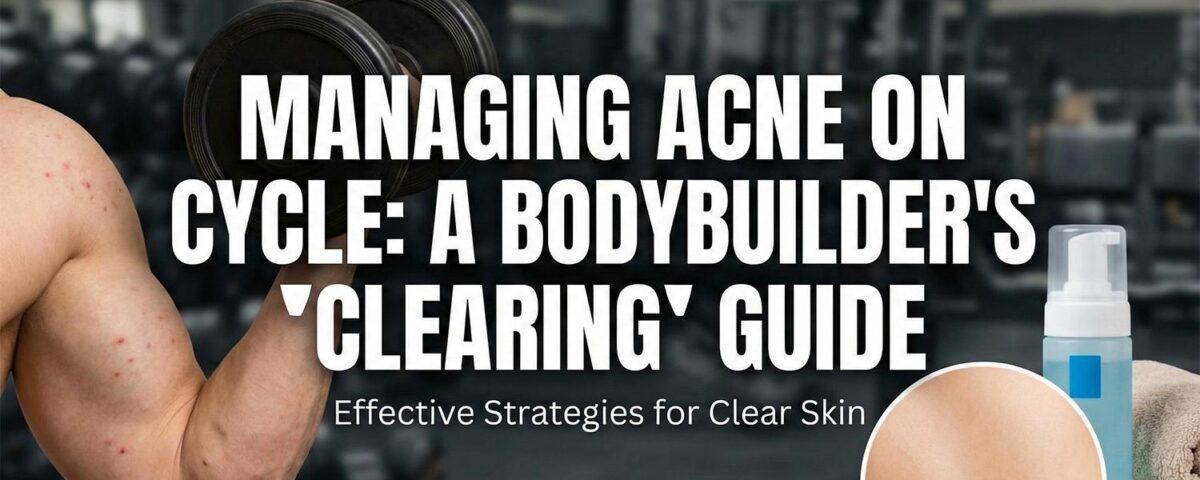
You have dialed in your training, your diet is meticulous, and your physique is growing by the week. But every time you look in the mirror, your confidence takes a hit—not because of your muscles, but because of your skin.
“Cycle acne,” “backne,” or hormonal breakouts are among the most common and frustrating side effects of performance enhancement. It is the visible red flag of hormonal fluctuation.
Contrary to popular belief, this isn’t just about hygiene. You can shower three times a day and still break out if your internal chemistry is off. This guide strips away the bro-science and dives into the dermatology of androgen use, providing a step-by-step protocol to clear your skin and keep it that way.
The Mechanism: Why Do We Break Out on Cycle?
To fix the problem, you must understand the biological trigger. Acne is not caused by “toxins” leaving the body; it is a specific reaction of the Pilosebaceous Unit (the hair follicle and oil gland).
1. Sebaceous Gland Hypertrophy
Your sebaceous glands (oil glands) are lined with androgen receptors. When you introduce exogenous testosterone or other anabolic compounds, these glands go into overdrive. They physically enlarge and produce excessive amounts of sebum (oil).
2. Hyper-Keratinization
Simultaneously, the skin cells lining the pore shed faster than normal. This sticky mixture of dead skin cells and excess oil creates a plug (comedone).
3. Bacterial Colonization
A bacterium called *Cutibacterium acnes* (C. acnes) feeds on this oil. In this oxygen-deprived, oil-rich environment, the bacteria multiply rapidly, causing inflammation, redness, and pus-filled cysts.
Identifying the Culprit: Estrogen vs. DHT
Not all “gear acne” is the same. The root hormonal cause dictates the treatment.
High Estrogen (E2) Acne
If you are running aromatizing compounds (like high-dose Testosterone or Dianabol) and neglecting your Aromatase Inhibitor (AI), your estrogen is likely skyrocketing. High estrogen increases systemic inflammation and can alter sebum consistency.
The Fix: Verify with blood work. If E2 is high, adjusting your AI dosage often clears the skin within weeks.
High DHT (Dihydrotestosterone) Acne
DHT is the most potent androgen for the skin. Compounds like Masteron, Winstrol, or Primobolan are DHT-derivatives. They bind aggressively to sebaceous glands.
The Fix: This is harder to manage internally as it is the nature of the drug. Topical interventions and hygiene become critical here.
Tier 1: The “Hygiene” Baseline
Before buying drugs, optimize your environment. Mechanical friction and bacteria aggravate hormonal acne.
- Shower Immediately Post-Training: Do not drive home in your sweaty gym clothes. Sweat dries and traps bacteria against the pores.
- Switch to Natural Fibers: Synthetic fabrics (polyester/spandex) trap heat and moisture. Wear loose cotton whenever possible to let the skin breathe.
- Change Sheets Often: You sleep for 8 hours a night. If your pillowcase is oily, you are marinating your face in bacteria. Change pillowcases every 2 days.
- Nizoral (Ketoconazole) Shampoo: While it is an anti-fungal for dandruff, using this as a body wash on the shoulders and back can reduce fungal acne, which often mimics bacterial acne.
Tier 2: Topical Interventions (OTC)
If hygiene isn’t enough, we move to chemical warfare. The goal is to unclog the pore and kill the bacteria.
Salicylic Acid (The Unclogger)
A Beta Hydroxy Acid (BHA) that is oil-soluble. It dives deep into the pore to dissolve the glue holding dead skin cells together. Use a 2% wash daily.
Note: Avoid harsh physical scrubs (apricot scrubs), which just increase inflammation. Chemical exfoliation is superior.
Benzoyl Peroxide (The Killer)
This introduces oxygen into the pore. Since *C. acnes* bacteria are anaerobic (hate oxygen), this kills them instantly.
Warning: It bleaches fabrics. Use a white towel and wait for it to dry before putting on a shirt. Start with 2.5% or 5%; 10% is often too irritating.
Tier 3: Internal Management & Supplements
Sometimes, the issue requires internal support to lower inflammation or manage oil production.
- Zinc Picolinate: (30-50mg/day). Studies show zinc can significantly reduce keratinocyte activation and inflammation.
- Vitamin B5 (Pantothenic Acid): High doses (several grams) are often touted in bodybuilding circles to reduce oil production. While anecdotal, many swear by it.
- NAC (N-Acetyl Cysteine): A powerful antioxidant that supports liver health. A stressed liver can manifest as poor skin health.
Furthermore, ensure your hormones are actually stable. Fluctuating levels cause more acne than high stable levels. If you are coming off a cycle, the crash can trigger a massive breakout. A proper Post Cycle Therapy (PCT) is essential to smooth out this transition. Check our PCT Category for protocols to stabilize your endocrine system.
Tier 4: The Nuclear Option (Pharmaceuticals)
When cystic acne becomes painful and leaves scars, dermatological intervention is often necessary. However, combining these drugs with anabolic cycles requires extreme caution.
Antibiotics (Doxycycline / Minocycline)
These kill bacteria and reduce inflammation.
The Risk: They destroy your gut microbiome and can be hard on the stomach. They are a short-term band-aid, not a long-term cure.
Isotretinoin (Accutane)
The most effective acne drug in existence. It physically shrinks sebaceous glands so they cannot produce oil.
The Bodybuilder’s Risk: Accutane is hepatotoxic (liver toxic) and dries out joints/ligaments.
Safety Rule: Never run Accutane alongside other liver-toxic oral steroids (like Superdrol or Dianabol). The combined load on the liver is dangerous. Keep doses low (10mg/day or 20mg every other day) to minimize joint dryness, which can lead to injury in the gym.
Healing the Scars: After the Storm
Once the active acne is gone, you may be left with red marks (PIE) or dark spots (PIH). Healing these requires collagen synthesis and skin regeneration.
Advanced users are now looking toward Peptides like GHK-Cu (Copper Peptides) or BPC-157 for their regenerative properties. These compounds can speed up the healing of skin tissue and reduce scarring. You can learn more about regenerative compounds in our Peptides Category.
Conclusion
You do not have to choose between a great physique and clear skin. Acne is a biological signal that your system is inflamed or unbalanced.
Start with the basics: clean your skin, wear clean clothes, and manage your estrogen. If that fails, utilize targeted topicals. Only escalate to harsh pharmaceuticals if absolutely necessary, and always prioritize liver and joint health. A contest-winning physique includes healthy skin—don’t neglect it.
