

GABA and Serotonin: Supplements for Stress Relief
July 9, 2024
Top 3 Supplements to Stack with Your Cutting Cycle
July 28, 2024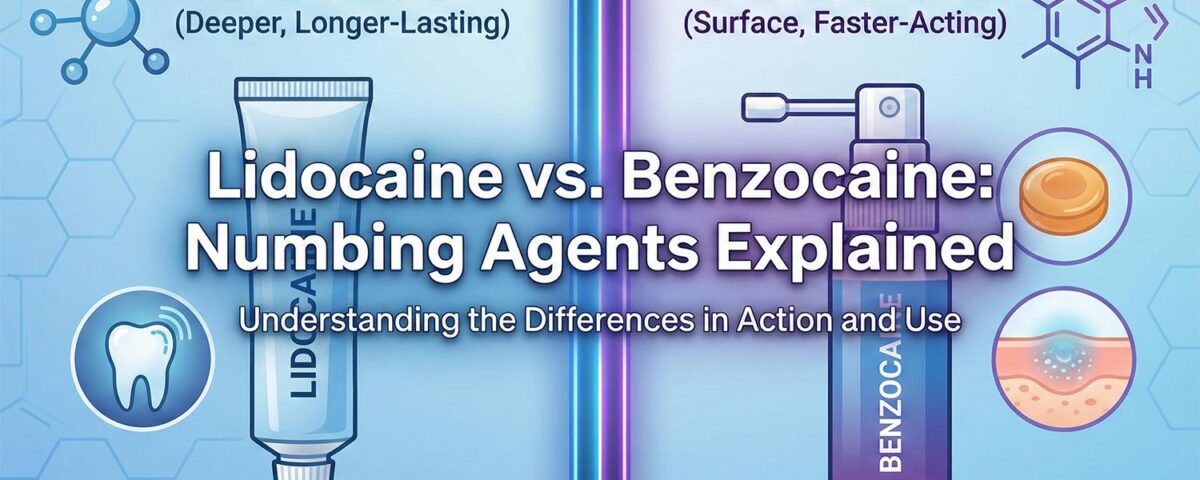
Whether you are preparing for a tattoo, a cosmetic procedure, or simply treating a minor burn, the goal is the same: stop the pain. Walk into any pharmacy or browse any medical supply site, and you will be met with two primary options: Lidocaine and Benzocaine.
To the average consumer, these might seem interchangeable. They both end in “-caine,” and they both numb the skin. However, chemically and physiologically, they are vastly different tools. One provides deep, long-lasting anesthesia suitable for medical procedures, while the other offers rapid, surface-level relief.
Choosing the wrong one can lead to ineffective pain management or, in rare cases, adverse reactions. This guide breaks down the biochemistry, potency, and safety profiles of Lidocaine vs. Benzocaine to help you select the right agent for the job.
The Mechanism: How Anesthetics Stop Pain
Before comparing them, we must understand how they work. Pain is essentially an electrical signal sent from your nerves to your brain.
Both Lidocaine and Benzocaine function as Voltage-Gated Sodium Channel Blockers. When a nerve wants to fire a pain signal, it opens channels to let sodium ions flood in. This creates the electrical spike (action potential). These drugs bind to those channels and physically plug them.
Think of it this way: If the nerve is a telephone wire sending a message to the brain, these drugs cut the line. No sodium influx means no electrical signal, which means your brain never receives the message that “this hurts.”
The Chemistry: Amides vs. Esters
The primary scientific difference lies in their chemical structure, which dictates how your body processes them and how likely you are to have an allergic reaction.
Lidocaine (The Amide)
Lidocaine belongs to the Amide group of anesthetics. It is metabolized in the liver. Amides are generally more stable and, crucially, are hypoallergenic. True allergic reactions to Lidocaine are extremely rare.
Benzocaine (The Ester)
Benzocaine belongs to the Ester group. It is metabolized in the plasma (blood) by enzymes called cholinesterases. Esters are more likely to cause allergic dermatitis (skin rashes) because they break down into a metabolite called PABA (para-aminobenzoic acid), which is a common allergen.
Head-to-Head: Potency, Speed, and Depth
When deciding between the two, you are usually trading speed for depth.
| Feature | Lidocaine | Benzocaine |
|---|---|---|
| Depth of Penetration | High (Penetrates deeper tissue) | Low (Surface/Mucosal only) |
| Onset of Action | 3 – 5 minutes | Almost instant (under 1 min) |
| Duration | Moderate (60 – 90 mins) | Short (10 – 20 mins) |
| Primary Use | Tattoos, minor surgery, injectables | Sunburns, toothaches, throat lozenges |
Lidocaine: The Heavy Lifter
Lidocaine is the gold standard for a reason. Because it can penetrate deeper into the dermis and subcutaneous tissue, it is the agent of choice for procedures that break the skin.
Best For:
- Tattooing & Microneedling: It can numb the nerve endings deep in the dermis where the needle penetrates.
- Injectable Procedures: Often mixed with dermal fillers to reduce pain during injection.
- Minor Surgery: Used (often injectably) for stitching wounds or removing moles.
However, Lidocaine requires time to work. If you apply a lidocaine cream, you typically need to wait 20 to 60 minutes (often under occlusion/plastic wrap) for it to fully permeate the skin barrier.
For those preparing for cosmetic or injectable procedures, effective pain management is often the first step in the protocol. If you are exploring aesthetic enhancements, you can view our related products in the Peptides & Skincare category.
Benzocaine: The Surface Specialist
Benzocaine has poor water solubility, meaning it struggles to be absorbed deeply into the body. This sounds like a negative, but it is actually a safety feature. Because it stays on the surface, it has low systemic toxicity.
Best For:
- Mucous Membranes: It works exceptionally well on “wet” surfaces like the inside of the mouth (gums/toothache) or throat (lozenges).
- Minor Skin Irritations: Insect bites, poison ivy, or mild sunburns where the pain is strictly on the very top layer of the epidermis.
The advantage of Benzocaine is speed. If you have a canker sore, dabbing Benzocaine on it provides relief in seconds. The downside is that it wears off just as quickly.
Safety Warning: Methemoglobinemia
While topical anesthetics are generally safe, they command respect. The most significant risk associated with Benzocaine is a condition called Methemoglobinemia.
This is a rare but serious blood disorder where the amount of oxygen carried by hemoglobin is reduced. It can cause the skin to turn blue (cyanosis), shortness of breath, and fatigue. Because of this risk, the FDA warns against using Benzocaine products on children under two years of age.
Lidocaine, while safer regarding blood oxygen, carries risks of cardiac issues if too much enters the bloodstream (Lidocaine Toxicity). This usually only happens if applied to huge surface areas of open skin or if wrapped in plastic for too long without medical supervision.
Conclusion: Which Should You Buy?
The decision tree is simple:
- Choose Lidocaine if: You need to numb intact skin for a procedure (like a tattoo or laser hair removal), need relief that lasts longer than 30 minutes, or have deep, aching pain.
- Choose Benzocaine if: You have a toothache, a sore throat, or a minor bug bite and need instant, short-term relief on the surface.
In the world of aesthetics and performance, discomfort shouldn’t be a barrier to results. Understanding the pharmacokinetics of your numbing agent ensures that your procedure is as smooth and painless as possible.
