

Proviron: The Unsung Hero of Libido Enhancement
July 17, 2023
Thyroid Health: Optimizing T3 and T4 for Metabolic Efficiency
September 6, 2023
Have you ever wondered how Cancer Medication impact the daily lives of those battling this challenging disease? Beyond just fighting cancer cells, these cancer treatment drugs play a crucial role in improving patients’ overall well-being and quality of life. From managing pain and reducing side effects to enabling patients to lead more active and fulfilling lives, the advancements in cancer medications have been transformative. But what exactly makes these drugs so effective, and how do they contribute to a better quality of life?
As someone with a background in healthcare and a personal connection to cancer care, I’ve seen firsthand the profound impact that cancer medications can have on a patient’s life. My journey with this topic began when a close family member was diagnosed with cancer. Initially, our focus was solely on beating the disease. Still, as we navigated through various treatments, it became clear that maintaining a good quality of life was just as important as fighting the cancer itself.
During this time, I witnessed how the right combination of cancer treatment drugs not only targeted the cancer cells but also significantly alleviated the debilitating side effects associated with both the illness and its treatment. For instance, one of the essential medications used was specifically designed to manage nausea and vomiting caused by chemotherapy, which allowed my family members to eat, maintain strength, and participate in daily activities.
Seeing this transformation made me realize that cancer medications are not just about extending life but also about enhancing it, even in the face of such a challenging diagnosis. It highlighted the importance of a holistic approach to cancer care that considers the patient’s physical, emotional, and psychological well-being. This personal experience has driven my passion for understanding and sharing information about these medications’ critical role in improving patient outcomes.
In this article, we’ll delve into the impact of various cancer treatment drugs on patient quality of life, explore some of the most common and latest cancer medications available, and discuss the challenges in making these treatments accessible. We’ll also provide insights into specific medicines for different types of cancer and how they help manage symptoms and improve outcomes.
Next, we’ll discuss the importance of quality of life in cancer treatment and how modern medications are tailored to meet these needs.
How Modern Cancer Medications Improve the Quality of Life for Patients
Modern cancer treatment drugs have revolutionized the way we approach cancer care, offering not just hope for remission and survival but also significantly enhancing the quality of life for patients during and after treatment. Unlike traditional therapies, which often have severe side effects that could overshadow their benefits, today’s medications are designed with a more targeted approach. This means they aim to combat the cancer cells effectively and focus on minimizing side effects and managing symptoms, thereby improving patients’ overall well-being. Here’s how modern cancer medications achieve this:
- Targeted Therapy
- Immunotherapy
- Hormone Therapy
- Chemotherapy with Reduced Side Effects
- Oral Cancer Medications
- Symptom Management and Supportive Care Drugs
- Personalized Medicine
Learn more: Impact of Stress on Heart Health
Targeted Therapy
Targeted therapies specifically target cancer cells while sparing healthy cells, significantly reducing the side effects associated with traditional chemotherapy. Drugs like trastuzumab (Herceptin) for breast cancer and imatinib (Gleevec) for certain types of leukemia block specific molecules involved in cancer cell growth. According to the American Cancer Society, these therapies improve survival rates and allow patients to maintain a higher quality of life by reducing the severity of side effects like fatigue, nausea, and hair loss.
Immunotherapy
Immunotherapy boosts the body’s immune system to recognize and attack cancer cells. Medications like pembrolizumab (Keytruda) and nivolumab (Opdivo) have shown remarkable success in treating cancers such as melanoma and lung cancer. A study published in the Journal of Clinical Oncology found that immunotherapy patients reported better physical functioning and overall well-being than those on traditional chemotherapy. Immunotherapy tends to have fewer side effects, enabling patients to stay active and maintain their daily routines.
Hormone Therapy
Hormone therapies are used to treat cancers that rely on hormones to grow, such as breast and prostate cancer. Drugs like tamoxifen and aromatase inhibitors help reduce hormone levels or block their effects on cancer cells. The National Cancer Institute states that hormone therapies are generally well-tolerated and can be used over long periods, allowing patients to lead relatively everyday lives while keeping cancer growth under control.
Chemotherapy with Reduced Side Effects
While traditional chemotherapy is known for its harsh side effects, newer chemotherapy drugs and regimens are designed to be less toxic. For example, medications like capecitabine (Xeloda) are taken orally and have been shown to cause fewer side effects compared to older intravenous chemotherapy drugs. Furthermore, advancements in supportive care, such as medications to prevent nausea and vomiting, have made chemotherapy more tolerable for patients, as noted by the Mayo Clinic.
Oral Cancer Medications
Oral cancer medications offer the convenience of being taken at home, which reduces the need for frequent hospital visits and allows patients to maintain their routines. These drugs, like lenalidomide (Revlimid) for multiple myeloma and osimertinib (Tagrisso) for lung cancer, are part of a growing list of oral therapies that provide effective treatment with the added benefit of convenience and improved quality of life.
Symptom Management and Supportive Care Drugs
Beyond treating cancer directly, modern medicine also focuses on managing symptoms and side effects of the disease and its treatment. For example, drugs like ondansetron (Zofran) help control nausea, while medications like gabapentin can alleviate nerve pain. By addressing these symptoms, patients can maintain a better quality of life and remain more active and engaged in their daily lives. According to the National Comprehensive Cancer Network (NCCN), effective symptom management is a critical component of comprehensive cancer care that significantly enhances the patient’s experience.
Personalized Medicine
One of the most promising advances in cancer treatment is the development of personalized medicine, which tailors treatment to the individual’s genetic profile. Doctors can choose the most effective drugs that match the patient’s effects by analyzing the specific genetic mutations in a patient’s cancer. This approach improves treatment outcomes and minimizes the impact on the patient’s quality of life, as personalized treatments are more likely to be effective and less likely to cause unnecessary harm.
Next, we’ll examine the latest advancements in cancer treatment drugs and explore some of the breakthroughs that are making headlines in the fight against cancer.
Sources
The Latest Advancements in Cancer Treatment Drugs
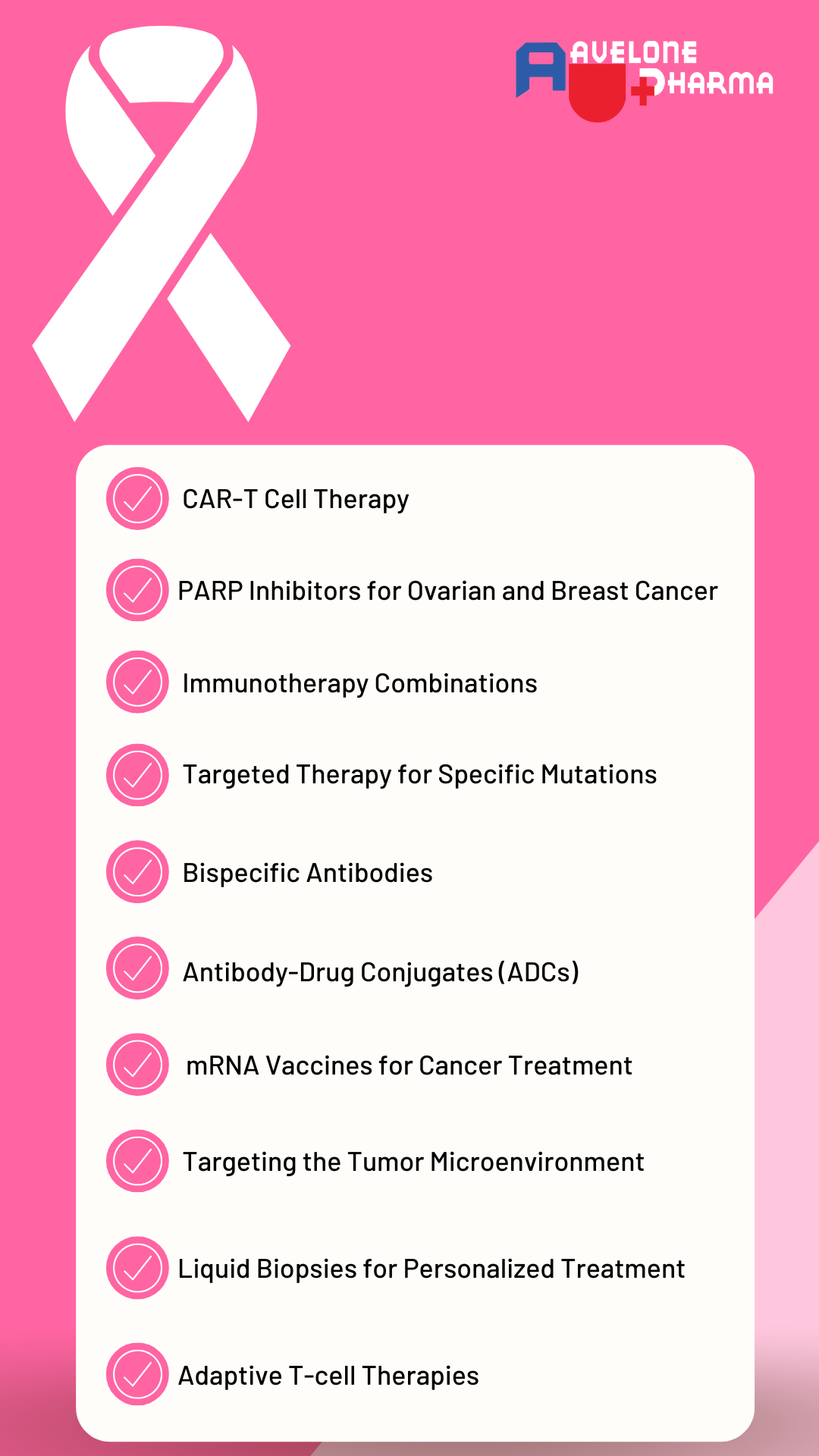
The field of cancer treatment is rapidly evolving, with significant breakthroughs offering new hope for patients worldwide. Advances in cancer treatment drugs are not only improving survival rates but also enhancing the quality of life for those living with the disease. Here, we explore some of the most recent and promising developments that are transforming cancer care:
- CAR-T Cell Therapy
- PARP Inhibitors for Ovarian and Breast Cancer
- Immunotherapy Combinations
- Targeted Therapy for Specific Mutations
- Bispecific Antibodies
- Antibody-Drug Conjugates (ADCs)
- mRNA Vaccines for Cancer Treatment
- Targeting the Tumor Microenvironment
- Liquid Biopsies for Personalized Treatment
- Adaptive T-cell Therapies
CAR-T Cell Therapy
Chimeric Antigen Receptor T-cell (CAR-T) therapy is a revolutionary form of immunotherapy that involves genetically modifying patients’ T-cells to target and destroy cancer cells. This therapy has successfully treated certain blood cancers, such as acute lymphoblastic leukemia (ALL) and diffuse large B-cell lymphoma (DLBCL). According to the American Society of Clinical Oncology (ASCO), CAR-T therapy has led to long-term remission in patients who had previously exhausted all other treatment options. The potential to customize this therapy for different cancer types is currently being explored.
PARP Inhibitors for Ovarian and Breast Cancer
PARP inhibitors, such as olaparib (Lynparza) and niraparib (Zejula), have become game-changers for BRCA-mutated ovarian and breast cancer patients. These drugs work by inhibiting the PARP enzyme, which cancer cells rely on to repair DNA damage, thereby causing the cancer cells to die. The National Cancer Institute (NCI) highlights that PARP inhibitors have significantly improved progression-free survival in patients with advanced ovarian and breast cancers and are now being tested for use in other cancers.
Immunotherapy Combinations
Combining different types of immunotherapies or combining immunotherapy with other treatments, such as chemotherapy or radiation, is a growing area of research. Recent studies have shown that combining immune checkpoint inhibitors like pembrolizumab (Keytruda) with targeted therapies can enhance their effectiveness. For example, the combination of nivolumab (Opdivo) and ipilimumab (Yervoy) has been approved for use in advanced melanoma and renal cell carcinoma, providing better outcomes than single-agent therapy alone. According to a study published in The Lancet Oncology, these combination therapies are expanding the scope of immunotherapy to a broader range of cancers.
Targeted Therapy for Specific Mutations
Advancements in genetic testing have enabled the development of drugs that target specific mutations in cancer cells. One example is the drug larotrectinib (Vitrakvi), which targets TRK fusion proteins in various cancers. This “tumor-agnostic” approach, which targets cancer-based on its genetic mutation rather than its location in the body, has opened new avenues for personalized cancer treatment. The U.S. Food and Drug Administration (FDA) has approved several such drugs, paving the way for more personalized, effective treatment options.
Bispecific Antibodies
Bispecific antibodies are engineered molecules that can bind to two targets simultaneously, bringing cancer cells and immune cells closer to enhance the immune response against the tumor. One such drug, blinatumomab (Blincyto), has shown promising results in treating certain types of leukemia. A recent article in the Journal of Hematology & Oncology discussed how bispecific antibodies are also being developed for solid tumors, representing a new frontier in cancer immunotherapy.
Antibody-Drug Conjugates (ADCs)
ADCs are targeted cancer drugs that deliver chemotherapy directly to cancer cells while minimizing damage to healthy cells. These” “smart bombs” consist of an antibody linked to a potent drug released once the antibody binds to the cancer cell. Recent approvals like trastuzumab deruxtecan (Enhertu) for HER2-positive breast cancer have shown remarkable efficacy in patients who have already undergone multiple lines of treatment. The American Cancer Society reports that ADCs are being tested in various cancers, including lung and bladder, with promising early results.
mRNA Vaccines for Cancer Treatment
Building on the success of mRNA technology used in COVID-19 vaccines, researchers are now exploring mRNA vaccines for cancer treatment. These vaccines instruct the body’s cells to produce proteins that trigger an immune response against cancer cells. According to a report from the National Cancer Institute (NCI), mRNA cancer vaccines are in early-stage clinical trials for melanoma and other cancers, and initial results have shown the potential to induce a robust immune response.
Targeting the Tumor Microenvironment
Researchers are increasingly focusing on the tumor microenvironment—the environment surrounding a tumor, including blood vessels, immune cells, and other components—to develop new treatments. Drugs like lenvatinib (Lenvima), which targets cancer cells and their supporting environment, are combined with immunotherapies to disrupt the cancer’s growth-supporting network. A study published in Nature Reviews Cancer highlighted that targeting the microenvironment is a promising strategy for overcoming drug resistance and improving patient outcomes.
Liquid Biopsies for Personalized Treatment
While not a drug, the development of liquid biopsies represents a significant advancement in cancer treatment. These blood tests detect cancer DNA circulating in the bloodstream, allowing for earlier detection and real-time monitoring of treatment response. This enables doctors to tailor treatments more effectively, switching therapies as needed based on the genetic changes in the cancer. According to the Journal of Clinical Oncology, liquid biopsies are becoming a valuable tool in guiding personalized treatment plans and improving the success rates of targeted therapies.
Adaptive T-cell Therapies
Adaptive T-cell therapies, such as T-cell receptor (TCR) therapies, are designed to enhance the natural ability of T-cells to fight cancer. These therapies are currently in clinical trials for various cancers, including melanoma and multiple myeloma. The goal is to create a more potent and precise immune response against cancer cells, potentially offering a new option for patients who have not responded to other treatments. The American Association for Cancer Research (AACR) has highlighted adaptive T-cell therapies as a promising area of research with the potential to transform cancer treatment.
Source:
Challenges and Strategies for Improving Access to Cancer Drugs
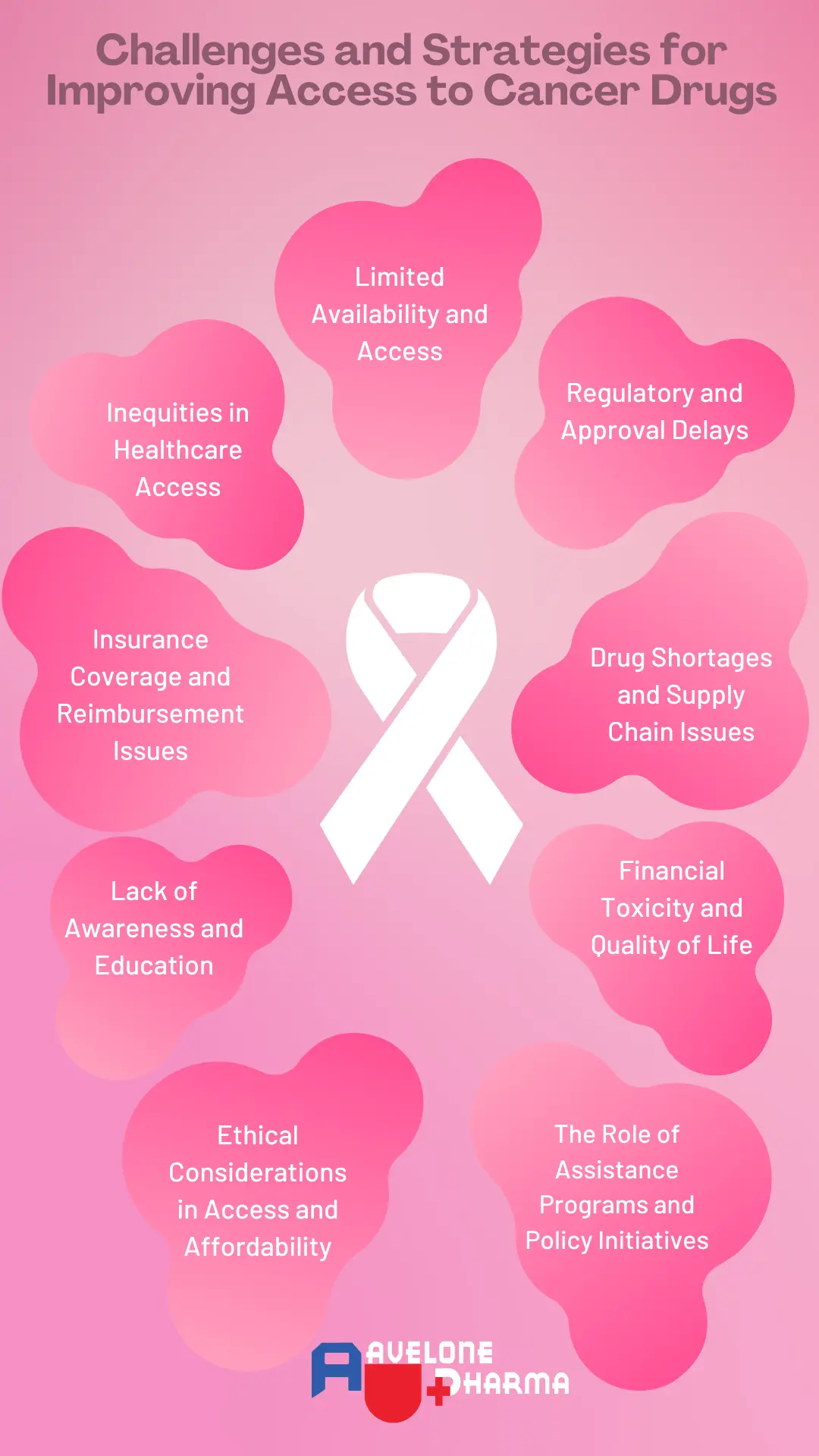
The high cost and limited availability of cancer drugs pose significant barriers to access, but strategies like drug pricing regulation, expanded insurance coverage, and global healthcare initiatives are essential for improving patient access.
- Limited Availability and Access
- Inequities in Healthcare Access
- Insurance Coverage and Reimbursement Issues
- Drug Shortages and Supply Chain Issues
- Ethical Considerations in Access and Affordability
- Regulatory and Approval Delays
- Lack of Awareness and Education
- Financial Toxicity and Quality of Life
- The Role of Assistance Programs and Policy Initiatives
Limited Availability and Access
While many innovative treatments are available in specialized cancer centers in high-income countries, access remains limited in low- and middle-income countries. Factors such as lack of infrastructure, trained healthcare professionals, and the high cost of importing these drugs contribute to their limited availability. The World Health Organization (WHO) reports that the majority of cancer patients worldwide do not have access to these advanced therapies, resulting in disparities in treatment outcomes based on geographic location.
Inequities in Healthcare Access
Even within high-income countries, there are disparities in access to innovative cancer treatments. Patients from marginalized communities, rural areas, or those with lower socioeconomic status often face barriers such as limited access to healthcare facilities, transportation issues, and lack of adequate insurance coverage. A study published in the Journal of Clinical Oncology highlighted that these disparities lead to differences in cancer survival rates, as patients in underserved areas are less likely to receive cutting-edge treatments compared to those in urban or affluent regions.
Insurance Coverage and Reimbursement Issues
Insurance coverage for new and expensive cancer treatments can be inconsistent, with some therapies not covered or only partially covered by health insurance plans. This leaves patients facing substantial out-of-pocket costs. The National Cancer Institute (NCI) notes that the approval process for new treatments by insurance companies can be slow, and coverage policies can vary widely, creating confusion and financial uncertainty for patients and their families.
Drug Shortages and Supply Chain Issues
The global demand for innovative cancer drugs is increasing, but supply chain disruptions and manufacturing challenges can lead to shortages. These shortages can delay treatment for patients who rely on these drugs, potentially compromising their chances of recovery or remission. The U.S. Food and Drug Administration (FDA) has reported several drug shortages for critical cancer medications, citing manufacturing problems and raw material shortages as contributing factors.
Ethical Considerations in Access and Affordability
These treatments’ high cost and limited availability raise ethical questions about who gets access to life-saving therapies. Should financial capability determine a patient’s access to the best possible care? According to the Ethics in Medicine journal, policies that balance innovation with equitable access are needed to ensure that all patients, regardless of their financial situation, can benefit from medical advancements.
Regulatory and Approval Delays
While many new cancer treatments show promise in clinical trials, the regulatory approval process can be lengthy and complex, delaying their availability to patients. The stringent requirements for safety and efficacy are crucial, but they can also slow down the time it takes for a drug to reach the market. The European Medicines Agency (EMA) and the U.S. FDA are working to streamline these processes, but regulatory hurdles remain a significant challenge in quickly bringing new treatments to patients.
Lack of Awareness and Education
Even when new treatments are available, patients and some healthcare providers may need to be aware of these options. This can lead to the underutilization of potentially beneficial therapies. The American Cancer Society emphasizes increased education and awareness about new treatment options to ensure patients can make informed decisions about their care.
Financial Toxicity and Quality of Life
The financial strain caused by the high cost of cancer treatments can lead to what is known as “financial toxicity.” This term refers to the negative impact on a patient’s quality of life due to the financial burden of medical expenses. The stress and anxiety associated with financial toxicity can affect mental health, adherence to treatment, and overall well-being, as noted by the Journal of Clinical Oncology.
The Role of Assistance Programs and Policy Initiatives
Assistance programs and policy initiatives are essential to address these challenges. Organizations like the Patient Advocate Foundation and the Cancer Financial Assistance Coalition offer support to patients struggling with the cost of treatment. Additionally, policy changes at the governmental level are needed to improve access and affordability. These measures include advocating for drug price regulations, expanding insurance coverage, and supporting research into cost-effective treatments.
Sources:
https://www.who.int/news-room/fact-sheets/detail/cancer
Learn more: Best Supplements to Boost the Immune System
Conclusion
Cancer medications’ role in enhancing patients’ quality of life cannot be overstated. These advancements in cancer treatment drugs have transformed what was once a grim outlook into a journey of hope and improved well-being. From targeted therapies and immunotherapies to the latest breakthroughs in personalized medicine and CAR-T cell therapy, modern cancer treatments are extending survival rates and enabling patients to lead more fulfilling lives during and after treatment.
However, as promising as these innovations are, significant challenges remain. The high cost of these drugs, limited availability in certain regions, and disparities in healthcare access pose substantial barriers for many patients. The ethical considerations surrounding who gets access to these life-saving treatments further complicate the landscape. While assistance programs and policy initiatives offer some relief, more needs to be done to make these advancements accessible and affordable for all.
Addressing these challenges requires a multi-faceted approach, including continued research and development, policy changes to regulate drug pricing and expand insurance coverage, and global efforts to improve healthcare infrastructure in underserved regions. By working together, we can ensure that the benefits of these innovative cancer treatments reach all who need them, ultimately improving outcomes and quality of life for cancer patients worldwide.
As we look to the future, the goal remains clear: to continue advancing cancer care, making it more effective, accessible, and compassionate so that every patient has the best chance at not just surviving but thriving.
Learn more: New Medications for Treating Digestive Problems

Frequently Asked Questions (FAQs)
How do modern cancer medications improve the quality of life for patients?
They reduce side effects, manage symptoms, and allow patients to maintain daily activities, enhancing overall well-being.
Why are cancer treatment drugs so expensive?
High costs are due to complex research, development, and manufacturing. Improved policies and expanded insurance coverage are needed for better accessibility.
What are some recent breakthroughs in cancer treatment drugs?
Recent advancements include CAR-T cell therapy, PARP inhibitors, and bispecific antibodies, offering more effective and targeted treatments.
