

Treatment of Erectile Dysfunction: Exploring Psychological and Physical Causes
January 28, 2024
The Role of Analgesics in Acute Injury Treatment
February 6, 2024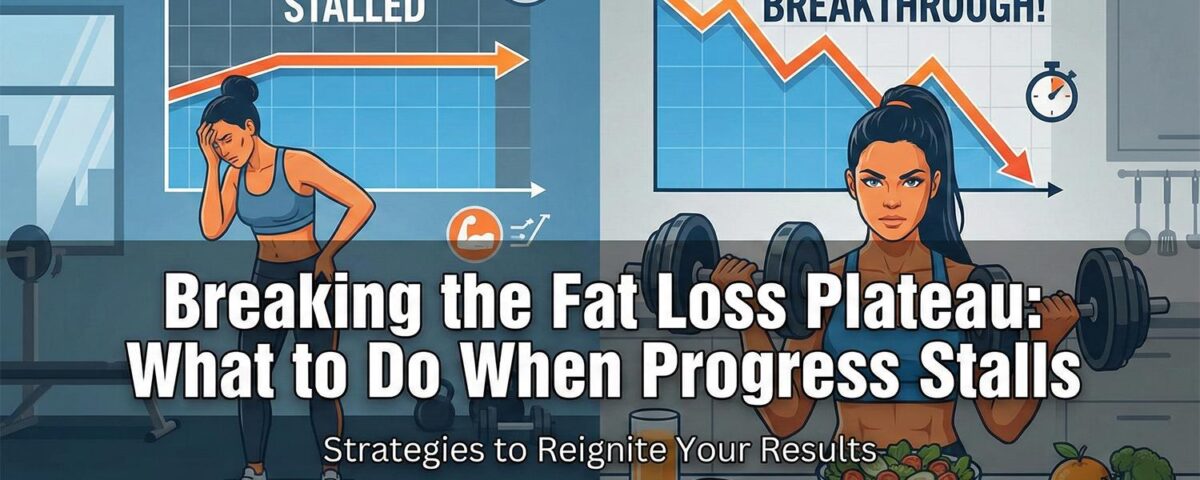
There is nothing more demoralizing in fitness than the plateau. You have been disciplined for weeks. You are tracking every gram of food. You are hitting the gym daily. For the first month, the weight flew off. But for the last 14 days, the scale has not budged an ounce.
Panic sets in. The natural instinct is to slash calories further and double the cardio. This is usually the wrong move.
A fat loss plateau is not a failure of will; it is a physiological adaptation. Your body is a survival machine designed to prevent starvation. When you restrict calories, your body fights back by downregulating your metabolism. This guide explains the science of “Adaptive Thermogenesis” and provides a step-by-step protocol to outsmart your biology and get the scale moving again.
The Science: Why Did You Stop Losing?
To break the plateau, you must understand why it exists. It is driven by a phenomenon called Metabolic Adaptation.
When you lose weight, your body requires less energy to function. You are carrying less mass, so your Basal Metabolic Rate (BMR) drops. However, the drop is often larger than the weight loss would predict. This is your body becoming “efficient.”
The Hormonal Crash:
- Leptin Drops: The “satiety hormone” produced by fat cells plummets, signaling the brain that energy stores are low.
- Thyroid Downregulation: The conversion of T4 to T3 (active thyroid hormone) slows down, reducing body temperature and daily calorie burn.
- Cortisol Rises: The stress of dieting spikes cortisol, which leads to water retention that masks fat loss.
Step 1: The Audit (Are You Actually Stalled?)
Before changing your strategy, you must verify the data. A true plateau is defined as no change in scale weight or body measurements for two consecutive weeks.
The “Calorie Creep” Factor:
Most plateaus are simply user error. A splash of oil here, a handful of almonds there, or “eyeballing” portion sizes can easily erase a 300-calorie deficit. Re-commit to weighing absolutely everything for 3 days to ensure your intake is what you think it is.
The “Water Mask”:
If you are stressed and training hard, your cortisol is high. High cortisol causes water retention. You might have lost 2 lbs of fat this week, but if you are holding 2 lbs of water, the scale looks stagnant. If you feel “squishy” rather than firm, this is likely water, not fat.
Step 2: The “Eat More” Strategy (The Diet Break)
It sounds counterintuitive, but sometimes the best way to lose fat is to eat more. If you have been in a steep deficit for 12+ weeks, your metabolism is likely suppressed.
Implementing a Diet Break involves raising your calories to “maintenance” level for 7 to 10 days. You typically do this by increasing carbohydrates.
Why this works:
- Restores Leptin: Carbohydrates signal the brain that the “famine” is over, boosting leptin levels.
- Lowers Cortisol: Removing the stress of the deficit flushes out water retention (the “whoosh” effect).
- Upregulates Thyroid: Adequate energy intake signals the conversion of T4 to active T3.
Many athletes find that after a week of eating more, they actually drop weight due to the release of cortisol-induced water.
Step 3: Move Differently, Not Just More
If your diet is dialed in, look at your output. The mistake most make is adding hours of steady-state cardio. The body adapts to this quickly, becoming more efficient at running (burning fewer calories for the same distance).
Focus on NEAT (Non-Exercise Activity Thermogenesis):
When you diet, your body subconsciously makes you lazy. You fidget less, you sit more, and you park closer to the store. This unconscious reduction in movement can lower your daily burn by 300-500 calories.
The Fix: Track your steps. Ensure you are hitting 10,000 to 12,000 steps daily outside of the gym. This guarantees your background burn remains high without the systemic fatigue of intense cardio.
Step 4: Metabolic Support and Pharmacology
If you have audited your tracking, taken a diet break, and optimized your movement, but the stubborn fat remains, your metabolic machinery may need direct support. This is common in the final stages of a cut or for those with a history of metabolic damage.
Mitochondrial Uncoupling & Fat Oxidation
Sometimes the body needs a signal to prioritize fat as fuel. Compounds like Cardarine (GW-501516) or Injectable L-Carnitine are often utilized by advanced athletes to force the mitochondria to oxidize fatty acids more efficiently.
For those looking to break through stubborn set points, explore our Metabolic Health & Weight Loss category for specialized tools designed to enhance energy expenditure.
Thyroid & Peptide Modulation
If thyroid downregulation is the bottleneck, standard fat burners will do nothing. Advanced protocols often involve peptide therapies (like AOD-9604 or Frag 176-191) which specifically target adipose tissue breakdown without the jitters of stimulants.
To understand how bioregulators can assist in targeted lipolysis, view our Peptides category.
Step 5: Sleep and Inflammation
Finally, look at your recovery. Sleep deprivation creates insulin resistance. If you are sleeping 5 hours a night, your body physically cannot burn fat efficiently because your insulin levels remain chronically elevated.
The Protocol: Prioritize 7-8 hours of sleep. If you are training intensely, consider anti-inflammatory agents like Curcumin or Omega-3s to reduce systemic inflammation, which can otherwise block metabolic pathways.
Conclusion
A plateau is a signal, not a stop sign. It is your body telling you that it has adapted to the current stimulus. To progress, you must provide a new stimulus.
Do not blindly starve yourself. Audit your intake, consider a strategic diet break to reset your hormones, and ensure your metabolic machinery is supported. Fat loss is a game of chess against your biology—play smart, not just hard.
